
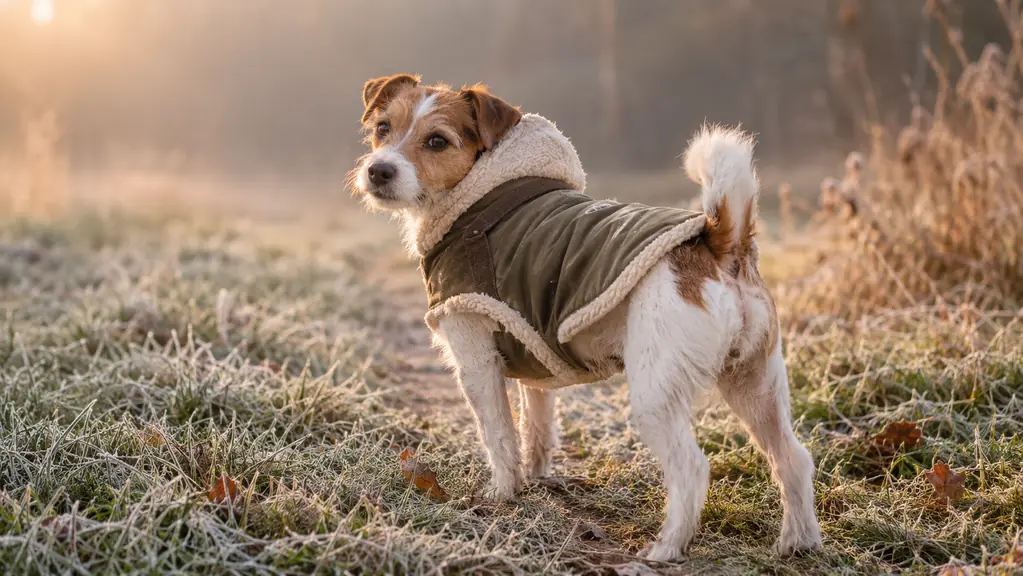
Pepper starts shivering below about 45 degrees. That is not a guess, I have watched it happen every fall for seven years. She is a 10-pound Miniature Pinscher with a short single coat, a deep chest, skinny legs, and zero interest in wet grass. Last November I bought her a Queenmore small dog coat after one too many mornings of carrying her home from the park with her legs tucked up. This review covers two full winters of daily use, not a week of trying it on in the kitchen.
I am Bev, I live in Medford, Oregon, and our winters are damp and cold. Frosty mornings in the 20s and 30s, drizzle that never quite decides to be rain, the odd snow that melts by noon. Pepper and I do two short walks a day, about 15 to 20 minutes each, around the park and the mobile-home loop. The Queenmore coat is the one she wears for all of it, from about November to March.
The Quick Verdict
A warm, lightweight, waterproof shell with a soft fleece lining that fits small and toy dogs well, survives a real Pacific Northwest winter, and hand washes like a dream. The hook and loop closure is the only thing I would change.
Amazon Check Today's Price →The coat that ended our cold-walk standoffs
If your small dog shivers on frosty mornings, this is the fleece-lined, waterproof shell I reach for every single day from November to March. It is warm, lightweight, and easy to put on a wiggly 10-pound dog.
Amazon Check Today's Price on Amazon →How I've Used It
The Queenmore coat has been Pepper's walking coat for two winters. It goes on before both daily walks, gets worn through frost, drizzle, wind, and one surprise snowstorm, and comes off at the door. When the weather is truly foul, she wears the Queenmore coat and I am the one who forgot a hat.
I chose the X-Small after measuring her the way the listing suggests. Pepper is about 14 inches from neck to tail base, 15 inches around the chest, and 9 inches around the neck. The X-Small chest size is listed at 39 centimeters, which is about 15.3 inches, so it matches her almost exactly. The neck size is listed at 9.84 inches, which is a touch roomy on her 9-inch neck, and that turned out to be a good thing because it means the coat does not rub.
The coat is made of fleece and polyester, with a soft fleece lining and a waterproof outer shell. It is also reversible, which I did not expect to care about and now use constantly. On frosty mornings I put the colorful side out so I can spot her in the gray park light. On wet days I flip it so the waterproof side faces the weather. Same coat, two ways to wear it, no extra gear to store.
The routine is the same every day from November to March. The coat hangs on a hook by the front door, between the leash and the bag of booties. At about 7:15 in the morning, Pepper stands by the door and waits while I fasten the hook and loop closure. The first week she wore it, she stopped every few steps to try to bite at the chest panel. Now she stands still, and on the coldest mornings she actually steps toward me when I pick the coat up. We do the park loop first, then the mobile-home loop, about 15 to 20 minutes each. The afternoon walk is the shorter one, usually just the loop around the homes, and she wears the coat for that too because the wind comes off the field and the sun is already low by three o'clock in December. The coat comes off at the door, gets a shake, and goes back on the hook for the next walk.
Warmth: What It Actually Does on a 28-Degree Morning
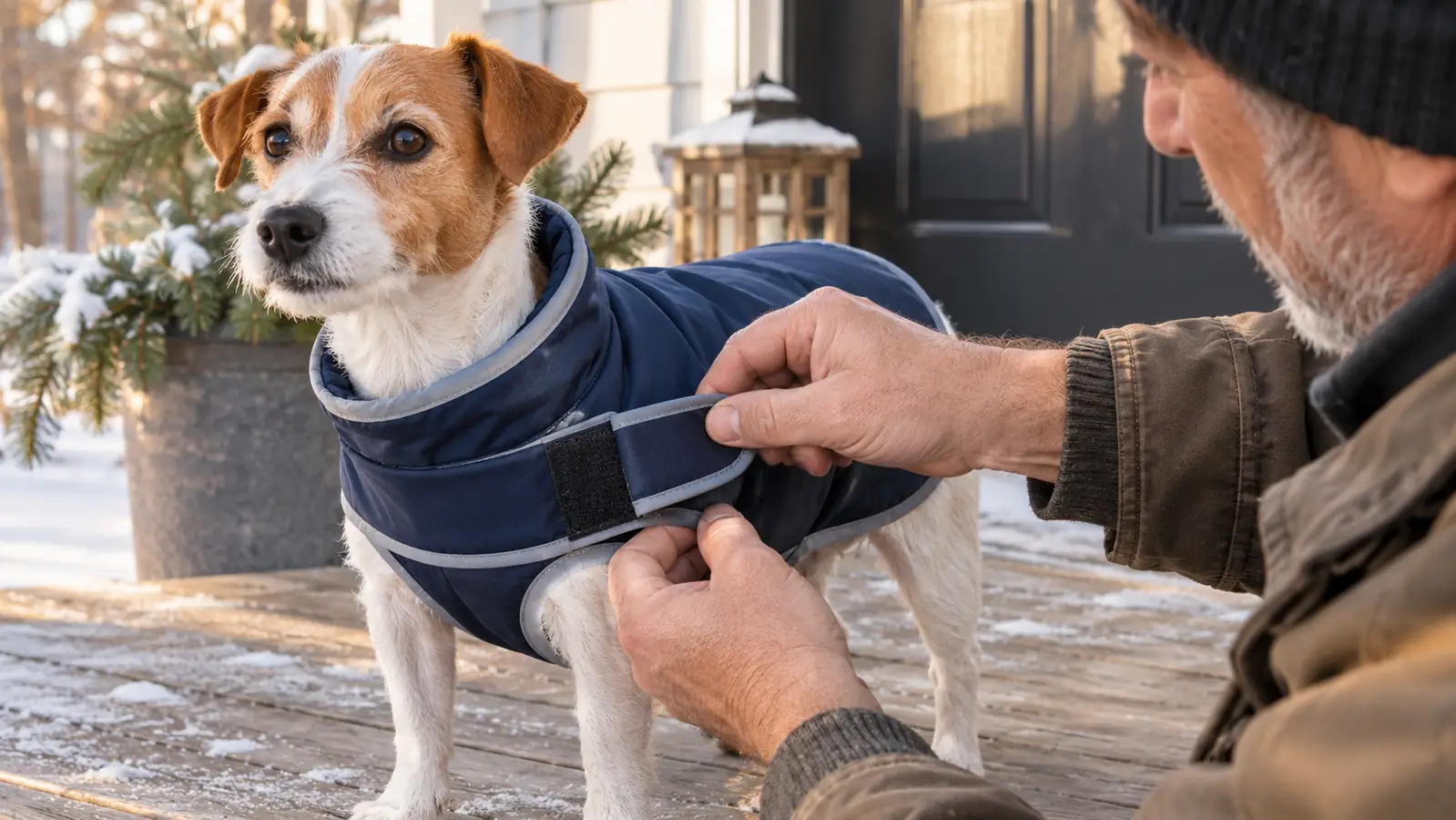
The warmth is the whole point, so I will be specific. On a 28-degree morning with frost on the grass, Pepper walks the full loop without lifting her paws, without stopping to tuck her legs, and without the shiver she used to get by the time we reached the park gate. Before the Queenmore coat, a walk that cold meant carrying her home. Now she trots ahead of me and sniffs every single bush like it owes her money.
The fleece lining is what does the work. It traps her body heat against her chest and back, which is where a short-coated dog loses the most warmth. The waterproof shell blocks the wind and keeps the damp off. On drizzly days I have run my hand under the coat when we got home and her back was dry and warm. That is the whole job, and it does it.
The morning that convinced me was the second week of February, the day the forecast said 24 degrees with a wind coming straight across the field at the edge of the mobile-home loop. Pepper did her business at the usual spot, then instead of turning back for the door she kept going, nose down, checking the base of every fence post. We did the whole loop, about 18 minutes, and when we got home her chest was warm under the fleece and her back was dry. I hung the coat up and thought, well, that settles that. The wind was the part that used to bother her most. A short-coated dog feels it right through, and she would hunch her shoulders and walk with her tail low. With the Queenmore shell blocking that wind, she walks with her tail up and her ears forward. That is the difference I can see, not just feel.
One honest note: the coat covers her back, chest, and belly, but it does not cover her legs. A Miniature Pinscher has matchstick legs and they still get cold on the worst days. When the temperature drops into the teens, I add a pair of the QUMY snow boots and she is fine. The coat is not a full-body suit, and I would not expect it to be.
Fit and Sizing: Measure Before You Order
Queenmore makes this coat in 15 sizes, from X-Small up, so the fit depends entirely on measuring your dog first. I cannot say this strongly enough. Pepper is a size small in most brands, sometimes extra small, and the X-Small Queenmore fits her like it was made for her. The chest measurement was the one that mattered. Her 15-inch chest matched the listed 39 centimeters almost exactly, and the coat sits close without squeezing.
I almost ordered the Small. That is what Pepper wears in most brands, and a weight-based chart would have pointed me there. But I had learned my lesson years ago with a too-big coat from a big-box pet store, the kind that slid around her chest and let the wind straight in, so I measured first. I used a piece of string, wrapped it around the widest part of her chest just behind her front legs, marked it with my thumb, and laid it against a tape measure. Fifteen inches. The Queenmore X-Small lists a chest size of 39 centimeters, which is 15.3 inches. That half-inch of breathing room is exactly right. The coat sits close, does not spin, and does not squeeze. I checked the neck too. The listing says 9.84 inches, and Pepper's neck is 9 inches, so the coat has room to sit without pressing on her throat. That matters for a dog who likes to pull toward every interesting smell.
The hook and loop closure is easy to put on and take off, which matters when your dog has opinions about getting dressed. Pepper stands still for it now, but the first few times she tried to wiggle away and I still got it fastened in under ten seconds. The closure runs along the chest and belly, so there is no pulling anything over her head, which is the part she hates most.
The fit has not changed after two winters of use. No sagging, no stretched-out belly panel, no fraying at the edges where the leash rubs. The stitching has held up through daily wear and regular hand washing. For a coat in this price range, that was the surprise of the review.
Before the Queenmore coat, a 28-degree walk meant carrying Pepper home. Now she trots ahead of me and sniffs every bush like it owes her money.
Washing and Care: Hand Wash Only, and That Is Fine
The care instructions say hand wash only, and I have followed that for two winters. I fill the sink with cool water, add a drop of gentle detergent, swish the coat around, rinse it, and lay it flat to dry. It takes about five minutes of actual work and it dries overnight. I wash it every couple of weeks during the winter, more often if we got caught in mud, and it still looks almost new.
I will be honest that I was tempted to toss it in the washing machine on gentle, the way I do with Pepper's Fitwarm pajamas. I am glad I did not. The waterproof shell and the fleece lining are bonded together, and machine washing is exactly the kind of thing that makes bonded layers peel. Hand washing is a small price for a coat that has lasted two full winters.
The worst wash was the morning in December when the park path turned to mud and Pepper came home with the belly panel caked. I let the coat dry on the hook first, because mud is easier to brush off when it is dry, then I ran the sink. Cool water, a drop of the same gentle detergent I use on my own things, a few minutes of swishing. The mud came out of the fleece without any scrubbing, and the waterproof shell wiped clean with a damp cloth. It dried flat overnight and looked like nothing had happened. I have washed it that way every couple of weeks for two winters, and the fleece has never gone stiff or lost its softness. I have never put this coat in the machine, not once, and I think that is why the shell still beads water instead of soaking through.
The coat dries fast, which matters when you walk twice a day. If it gets soaked on the morning walk, it is dry by the afternoon. I have never needed a backup walking coat, and I own several other dog sweaters.
What I Would Change
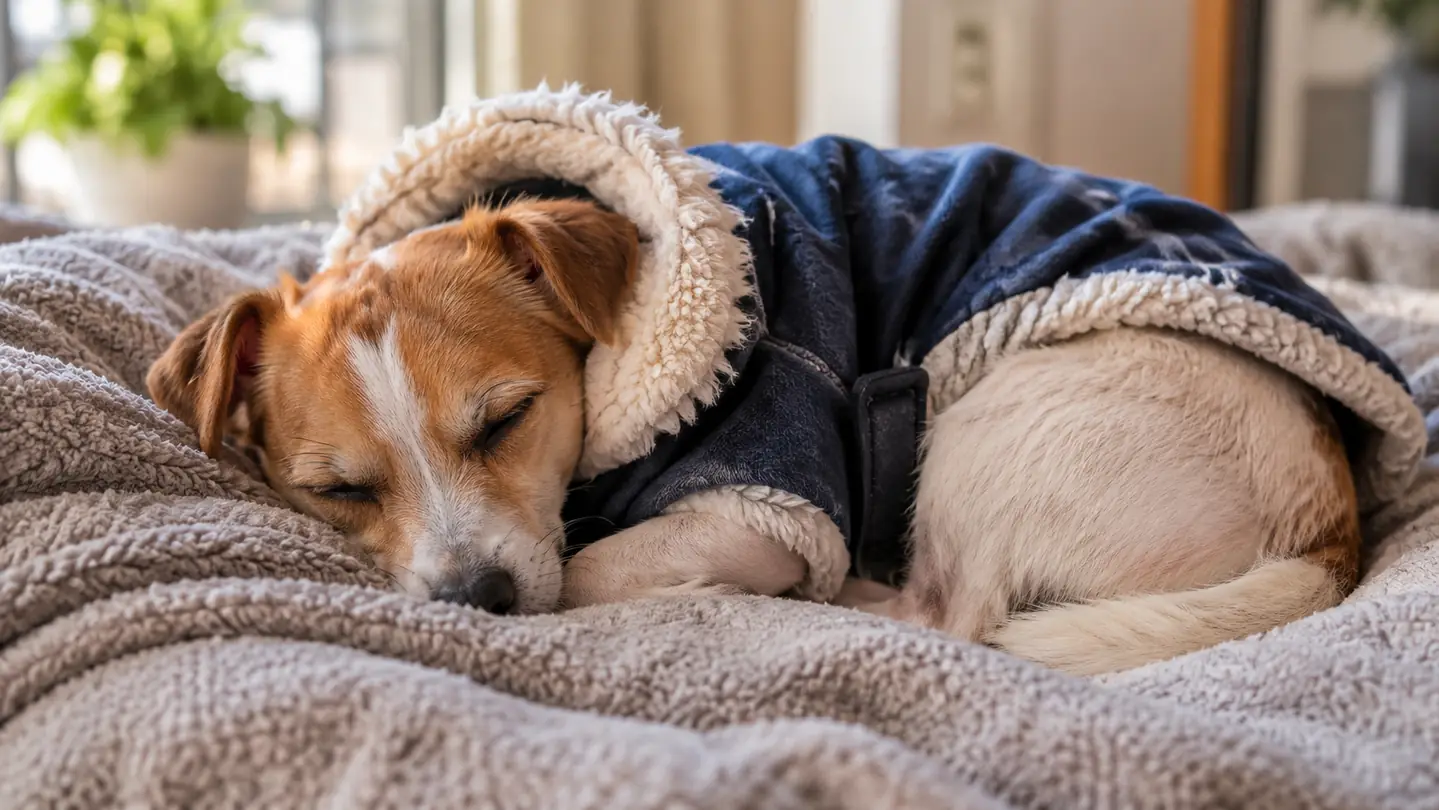
No review is honest without the cons, so here are mine. The hook and loop closure works, but it is not the most secure fastening in the world. Pepper has never escaped it, but I do check the closure before we head out, and I could see a very determined dog or a very vigorous roll in the snow working it loose. A second strap or a snap would make it feel more locked in. The one time she rolled in the snow, a patch of it packed under the belly panel and I had to refasten the closure twice before we got home. It held, but it made me wish for a sturdier second fastening.
The coat also runs a little warm for mild days. On a 45-degree morning with sun, Pepper gets too toasty by the end of the loop and asks to go home early. That is not really a flaw in a winter coat, but it means this is not an all-seasons piece. For chilly fall days I reach for the Lorehelina knit sweater instead, and save the Queenmore for real winter.
And the legs. I keep coming back to the legs. A small dog with skinny legs will still feel the cold on her feet and lower legs on the very worst days. The coat does its job for the body, and I pair it with boots when the salt and ice come out. If you want one single piece of gear that covers everything, this is not it. If you want a warm, dry body on a small dog, this is it.
What I Liked
- Genuinely warm fleece lining that stops the shivers on frosty walks
- Waterproof shell keeps the dog dry in drizzle and wet snow
- Reversible, so you get two looks and two levels of weather protection
- Easy hook and loop closure, no pulling anything over the head
- Available in 15 sizes, so small and toy dogs can get a real fit
- Hand washing is quick and the coat still looks new after two winters
Where It Falls Short
- Hook and loop closure could be more secure for determined escape artists
- Legs are not covered, so very cold days still need boots
- Hand wash only, which will not suit everyone
- Too warm for mild fall days, this is a real winter coat
Who This Is For
This coat is for anyone with a small or toy breed who shivers on cold walks. If your dog has a short single coat, a deep chest, skinny legs, or a habit of lifting paws off frosty grass, the Queenmore coat is worth a serious look. It is also for people who walk in damp weather. The waterproof shell means you are not choosing between a warm coat and a dry coat.
It is especially good for dogs in the X-Small to Small range, because the 15-size range means you can match a chest measurement instead of hoping a one-size-fits-all sweater will work. Measure your dog first, order the size that matches the chest and neck numbers, and you will get a coat that stays put and does not rub.
Who Should Skip It
Skip this coat if you want a machine-washable layer. Hand wash only is a firm instruction, and if you are not going to follow it, the coat will not last. Skip it if you need full leg coverage or paw protection, because this coat stops at the body. And skip it if you want a light indoor layer. This is a serious winter walking coat, and on mild days it is simply too warm.
I would also say skip it if your dog hates the feeling of a coat and you do not have the patience to build up to it slowly. Pepper took a few days to get used to the Queenmore coat, and now she stands still for it. But a dog who will not walk in any clothing will not be converted by this one, no matter how warm it is.
Give your small dog a warmer winter than last year
Two winters in, the Queenmore small dog coat is still the first thing I pack for cold walks. Measure your dog, pick the size that matches, and see if it ends your cold-morning standoffs too.
Amazon Check Today's Price on Amazon →