
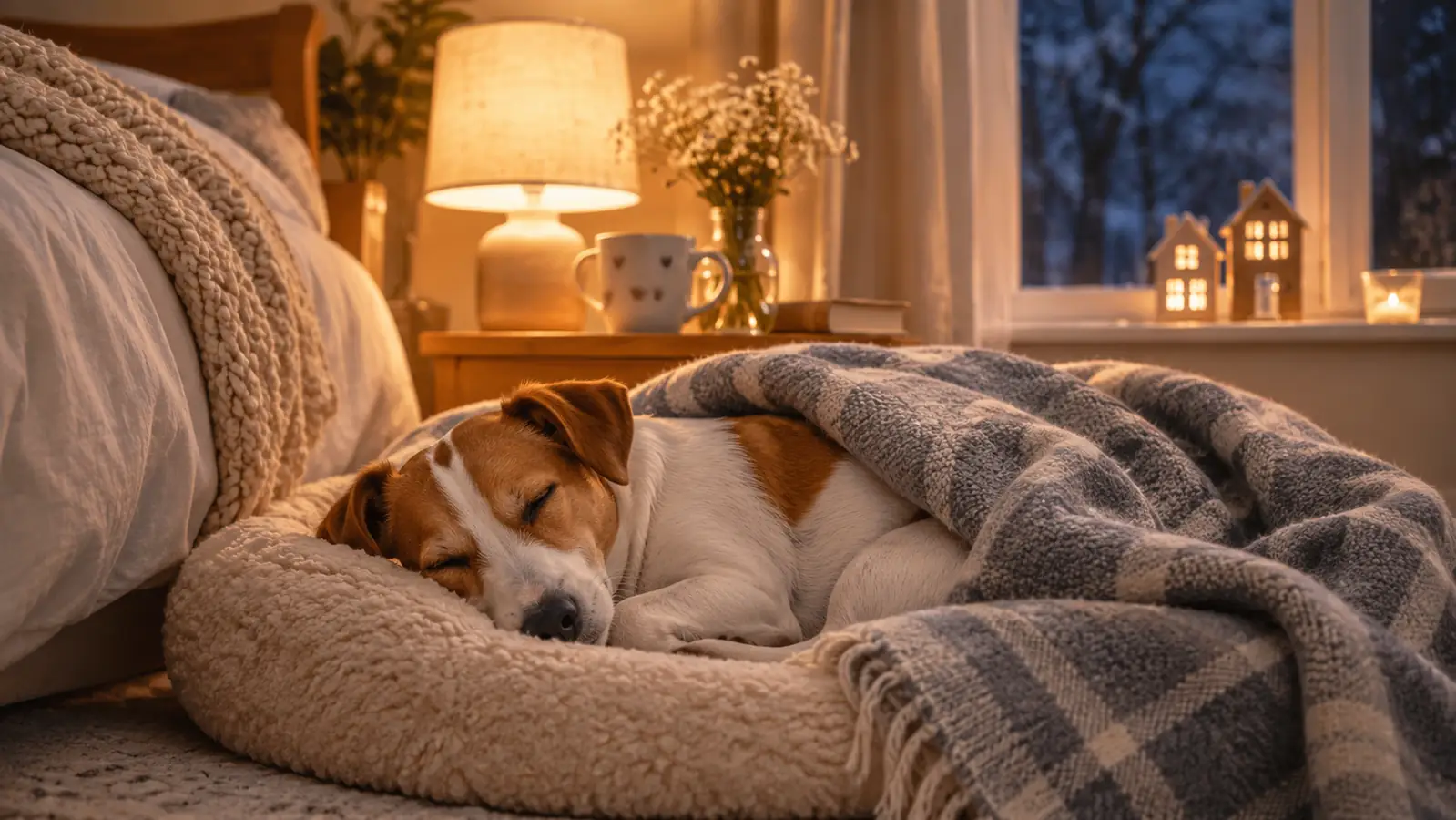
If your small dog shivers under the blanket at night, you already know the problem. You have tried an extra blanket, a heated bed, letting her sleep right up against you, and she still wakes up cold and curled into a tight ball. A tiny dog with a short single coat loses body heat fast, and once the furnace kicks down for the night, the bed is just not enough.
That was Pepper last fall. She is a 7-year-old Miniature Pinscher, about 10 pounds, with a deep chest, skinny legs, and a coat that was never built for Medford winter nights. She slept under a blanket, but she still shivered. Then I bought the Fitwarm turtleneck fleece pajamas, and within a few nights she stopped waking me with that little tremble. This is how I did it, step by step, so you do not have to guess.
The Pajamas That Stopped Pepper's Night Shivers
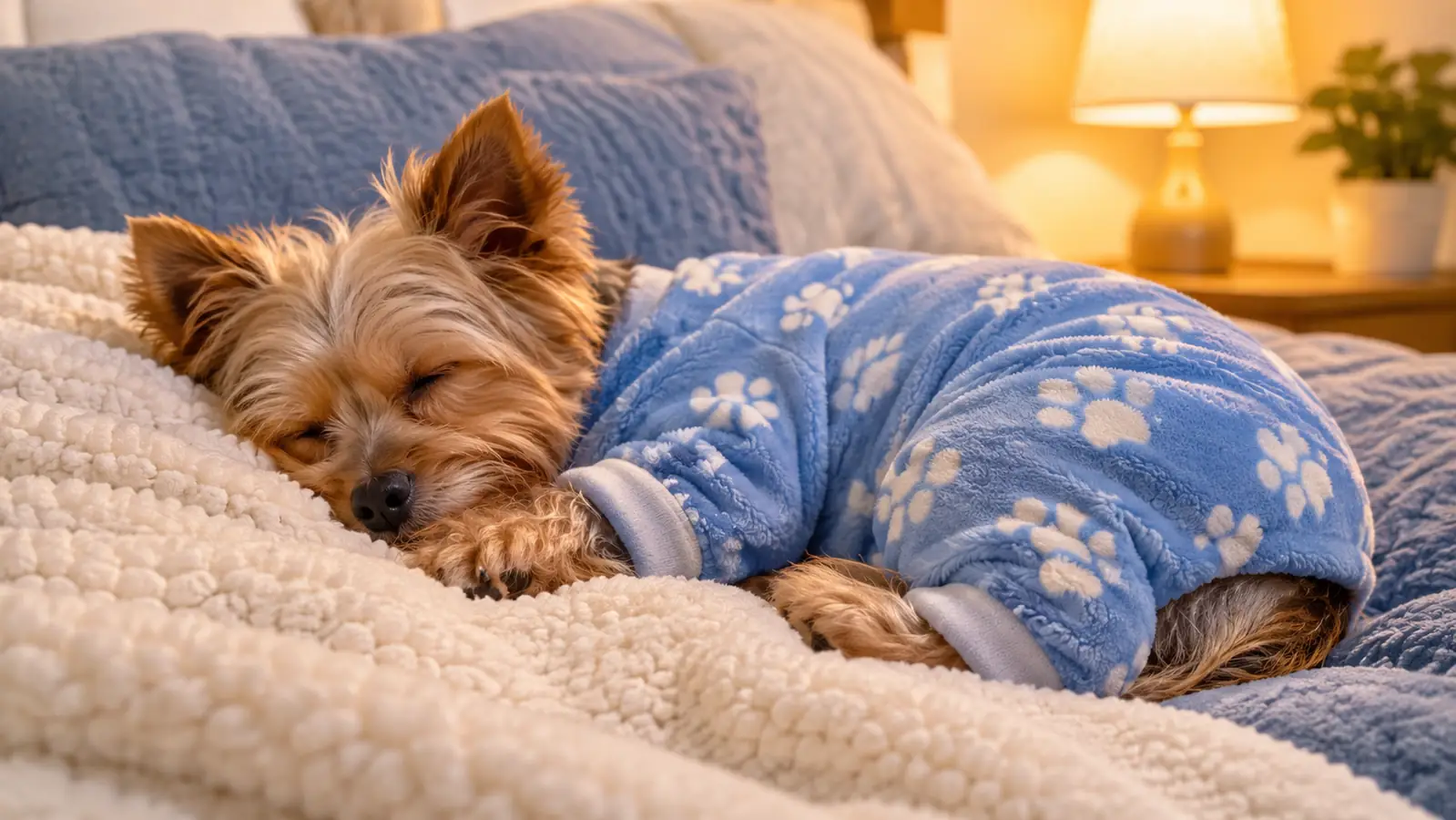
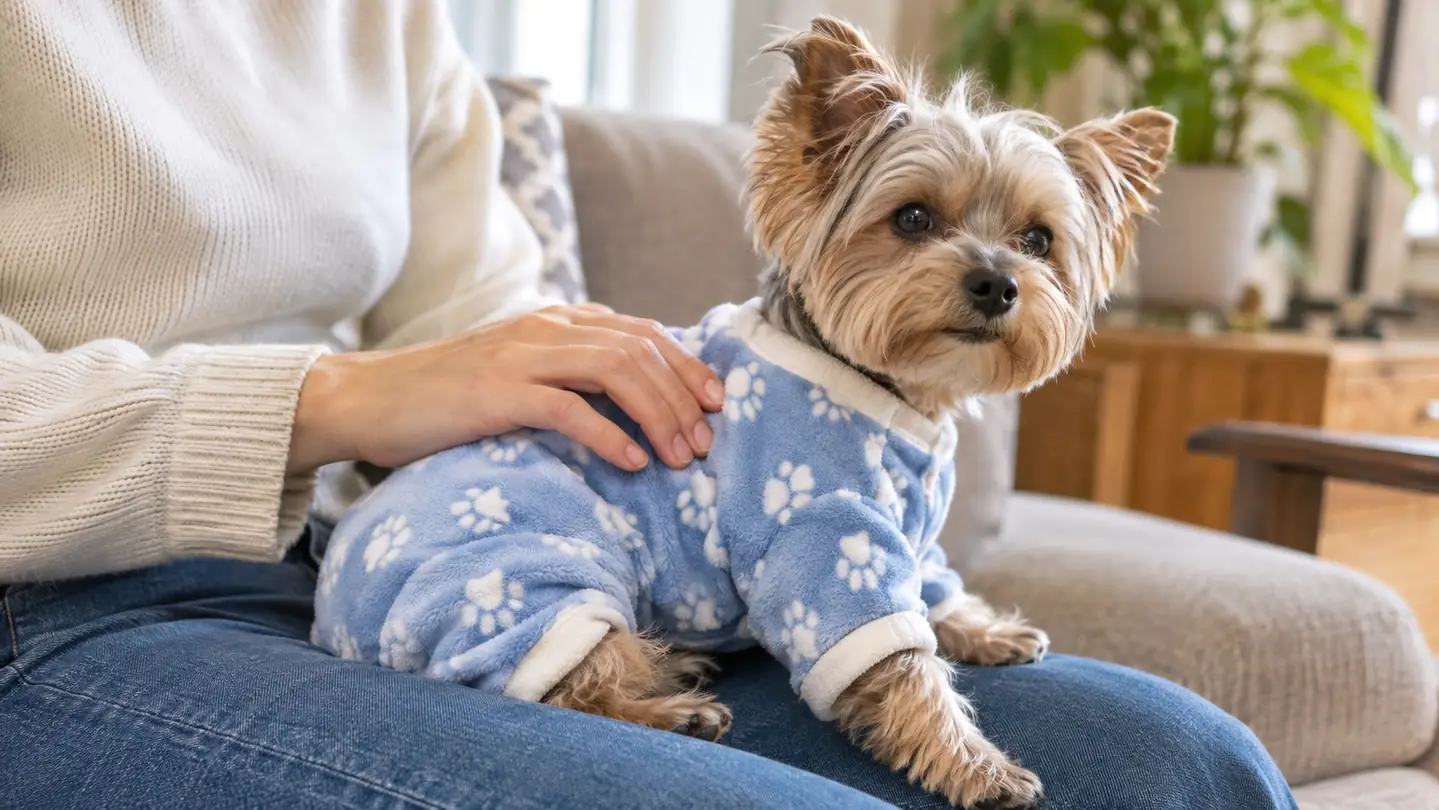
Fitwarm turtleneck fleece pajamas are made for small breeds, with a pull-on fit, a soft turtleneck, and thick plush polyester fleece that keeps a little dog cozy through the night. They are bedtime gear, not rain gear, and that is exactly the job they do well.
Amazon Check Today's Price on Amazon →Why a Pajama Instead of Just a Blanket
I asked myself the same question before I bought them. Pepper already slept under a blanket, so why would she need pajamas? The answer is that a blanket only works if it stays on. Pepper is a restless sleeper. She turns, she stretches, she kicks, and by 2 a.m. the blanket is usually bunched up at her feet or half off the bed. A pajama stays where you put it, which means she is warm even when the blanket is not covering her.
There is also the matter of getting up. Pepper does a quick potty trip in the middle of the night a few times a week, and coming back into a cold bed is rough when you are a 10 pound dog with a short single coat. With the pajamas, she hops back onto the bed and she is already warm. The fleece holds her body heat, and the turtleneck keeps the draft off her neck. That is something no blanket can do.
What You'll Need
Before you order, gather three things: a soft measuring tape, a notepad, and about ten minutes when your dog is calm. You will measure her back, her chest, and her neck, and you will write the numbers down before you look at any size chart. That sounds fussy, but it is the difference between pajamas that stay on all night and pajamas that end up in the laundry basket by midnight.
You do not need a special measuring tape. Any soft tape measure from a sewing kit works, because it can wrap around a curved chest. A fabric tape is better than a metal ruler, and a piece of string compared against a ruler works in a pinch. The point is to measure the dog, not the pajamas.
Step 1: Measure Your Dog Before You Order
Stand your dog on a flat surface and wait until she is standing square, not sitting and not stretched out. Measure from the base of her neck, right where the collar sits, to the base of her tail. That is her back length. Write it down.
Next, wrap the tape around the deepest part of her chest, just behind her front legs. That is the number that matters most for a pull-on pajama, because the pajama has to go over her chest and shoulders and then stay there all night. Write that down too.
Finally, measure her neck where a collar would sit. The Fitwarm pajamas have a soft turtleneck, so you want this number to be close to the neck size on the chart, or a little under. A neck that is too tight will make her paw at the collar all night, and a neck that is too loose lets cold air sneak in.
Step 2: Choose the Right Size From the Chart
Now compare your numbers to the size chart on the listing, and trust the chest measurement first. The Fitwarm listing shows a Medium that fits a 12 inch back and a 16 inch chest, with a 10.5 inch neck. Pepper is about 15 inches around the chest, so the chest number told me the Medium would be snug and secure, not loose enough to slide around while she sleeps.
If your dog sits between two sizes, go by the chest. A pajama that is a little long in the back will bunch up, but a pajama that is too tight across the chest will bother her every time she curls up. You want her to forget she is wearing it, and that only happens when the chest fits.
One more thing: the Fitwarm pajamas are sized for small breeds, and the pull-on style means there is nothing to fasten once they are over her head. That also means there is no way to adjust the fit after they are on, so the measuring step really does matter. When in doubt, measure again.
Step 3: Introduce the Pajamas Slowly
Do not chase your dog around the living room with the pajamas on the first night. Pepper is suspicious of anything that involves being dressed. I let the pajamas sit on the couch for a day, then held them out so she could sniff them, and gave her a treat just for standing near them.
The first time I put them on her, I did it in the middle of the afternoon, not at bedtime. I slipped them over her head, worked her front legs through, and let her wear them for ten minutes while I gave her a little treat every couple of minutes. She walked funny for the first few minutes, which is normal. A dog who has never worn clothes has to learn that she can still move.
Keep the first session short and end it on a good note. Ten minutes, a few treats, then off they come. Do that for two or three afternoons and bedtime will be much easier, because the pajamas will already be familiar.
Step 4: Dress Her the Same Way Every Night
Routine is everything with a small dog. Pepper now knows that when I pick up the Fitwarm pajamas, it is bedtime, and she comes to me instead of hiding under the bed. I put them on the same way every night: over the head first, front legs in, then a quick check that the back is straight and the tail has room.
The turtleneck is the part I check most. It should sit snug around her neck without pressing. The Medium has a 10.5 inch neck, and on Pepper that is roomy enough that she can tuck her chin, but not so loose that it slides off her shoulders while she sleeps.
Give it a few nights before you judge. The first night Pepper wore them to bed, she stood up and shook herself twice and then settled. By the third night she was asleep in five minutes. Changes like this show up over a few nights or a few weeks, not overnight, so be patient with the process.
Step 5: Wash and Care So They Last the Season
The Fitwarm pajamas are machine washable, which is the reason they survive a winter of nightly wear. I wash them on the gentle cycle in cold water and lay them flat to dry. I do not put them in the dryer, because the ribbed cuffs are 95 percent cotton and 5 percent spandex, and heat is what makes that kind of cuff lose its shape.
Pepper wears these from late fall into spring, so they get washed once a week. One set is enough if you wash on a weekend, but a second set is nice if your dog sleeps in them every single night. The care instructions say to clean after use, so I do a quick check every morning for mud or damp before they go back in the drawer.
One honest warning: these are not water resistant. The listing says so plainly. They are for dry, cold nights indoors, not for a wet walk in the rain. If Pepper goes out for a last potty trip in drizzle, the pajamas come off at the door, and she wears her walking coat for that job.
How to Tell If the Fit Is Right
The right fit is easy to check. You should be able to slide two fingers flat between the pajamas and her chest, and the back should lie smooth without a big wrinkle bunching under her tail. If the pajamas twist around her body while she sleeps, they are too big. If she walks stiff-legged or refuses to settle, they are too small.
Watch how she moves when she first stands up in the morning. Pepper stretches, shakes, and hops off the bed like nothing is on her. That is the test. A pajama that fits well disappears from her mind the moment she is awake, and that is exactly what you want from something she wears for eight hours.
Who These Pajamas Are For
These Fitwarm pajamas are for small and toy breeds that lose body heat quickly: Miniature Pinschers, Chihuahuas, Yorkies, Italian Greyhounds, and any little dog with a short coat or very little body fat. They are also for older small dogs whose joints get stiff in the cold, and for dogs who simply sleep better when they feel tucked in. If your dog shivers at night even under a blanket, this is the fix to try.
Pepper is a good example. She is 10 pounds with a deep chest and legs like twigs, and she starts shivering below about 45 degrees. She wore these pajamas every night from late fall into spring, and she slept under the blanket the whole time without a single shiver. If your dog is built anything like her, this is the size and style to start with.
Who Should Skip Them
Skip these if your dog runs hot, sleeps in a very warm room, or hates wearing anything so much that she freezes in place. Also skip them if you need something for wet weather. These pajamas are not water resistant, so they are not a raincoat and they are not a walking coat for a downpour. If your dog needs outdoor warmth in wet conditions, look for a water resistant coat instead and keep these for dry nights indoors.
What Else Helps
Pajamas did the biggest job, but they were not the only thing that changed Pepper's winter nights. She still sleeps under a blanket, because that is her habit and she likes it. The pajamas just mean she is warm before the blanket goes on, and warm again if she kicks it off at 3 a.m. I also let her burrow. A small dog who can tuck her nose under the blanket edge and keep her back against the fleece is a small dog who sleeps through the night.
If your dog is very old, very young, or has health problems, talk to your vet before you add clothing to her routine. Our vet is the one who told me to measure Pepper before I ordered anything, and that advice saved me from buying pajamas that would have slipped off her skinny shoulders. A well-fitted pajama is a comfort. A poorly fitted one is just a costume.
By the third night, Pepper was asleep in five minutes, and she stopped shivering under the blanket entirely.
The Bottom Line
Keeping a small dog warm at night is mostly about fit and routine. Measure her, order the right size, introduce the pajamas slowly, and put them on the same way every night. The Fitwarm turtleneck fleece pajamas did for Pepper what an extra blanket could not: she stopped shivering, she stopped waking me up, and she sleeps through the night from late fall into spring. If your little dog is cold at night, this is where I would start.
Stop the 3 a.m. Shivers
Pepper wears the Fitwarm turtleneck fleece pajamas every night from late fall into spring. Measure your dog first, then check the size chart before you order.
Amazon Check Today's Price on Amazon →