
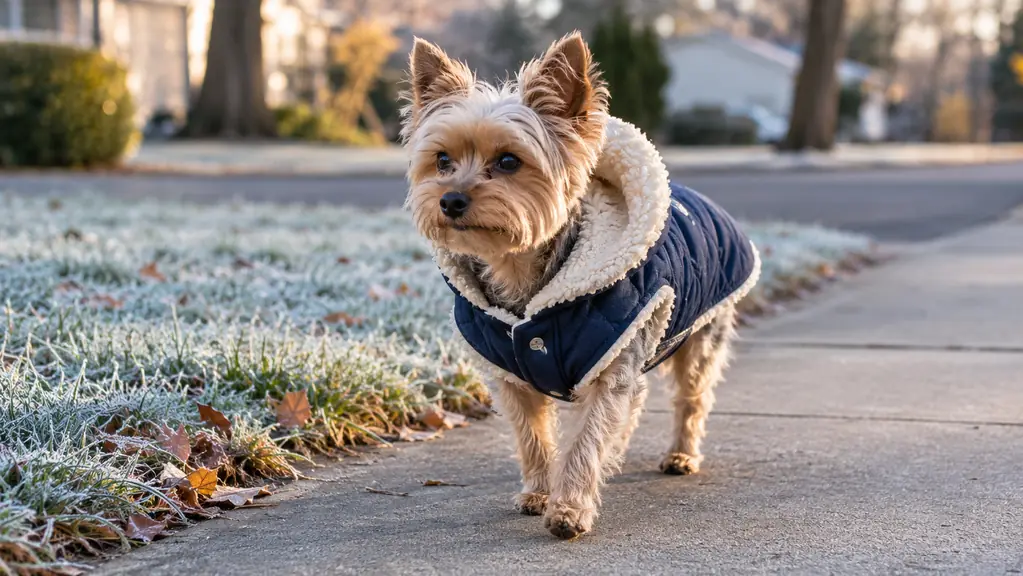
Pepper started shivering at about 45 degrees. Our vet said that is normal for a 10-pound dog with a short single coat, but knowing it is normal did not make it easier to watch. She would tuck her tail, lift one paw at a time off the cold pavement, and give me a look that said we were both failing at this walk. I tried doubling up her sweaters. I tried carrying her for the cold stretches. Neither worked, because the real problem was she needed a coat that blocked the wind and wet, not just another layer of knit.
Last November I bought the Queenmore dog winter coat in extra small, and it has been Pepper's walking coat through two Medford winters. If you have a small or toy breed that hates the cold the way mine does, here is the whole process I use: measure first, pick the right size, put it on in the right order, layer underneath when the frost is really bad, and wash it the way the tag says so it lasts another season.
The coat that fixed our frosty morning walks
Two winters in, the Queenmore fleece winter coat is still the first thing I reach for when the forecast says frost. It is waterproof, lined with soft fleece, and the hook and loop closure makes it quick to get on a wiggly dog.
Amazon Check Today's Price on Amazon →Step 1: Measure your dog before you look at sizes
The Queenmore coat comes in 15 sizes, which sounds like a lot until you realize dog coats are sized by chest girth and neck, not by weight. Pepper is about 14 inches from neck to tail base, with a 15 inch chest and a 9 inch neck. That put her in an extra small even though her weight would suggest a size up in some brands. Before the Queenmore, I bought a coat from a brand that sized by weight alone, and it said 10 pounds meant a small. It hung off Pepper like a tent, the straps sat halfway down her ribs, and she tripped on the hem twice before I took it off and sent it back. That is when I learned to shop by the chest number, not the weight on the bag. I measured Pepper on a Saturday morning in October, before I ordered anything, and I taped the numbers inside the kitchen cabinet so I would not have to re-measure her every time I looked at a new coat.
Use a soft measuring tape. Wrap it around the widest part of the chest, right behind the front legs, and keep it snug but not tight. Then measure the neck, and the length from the base of the neck to the base of the tail. Write those numbers down. The Queenmore listing gives a neck size of 9.84 inches for the extra small, and a chest size of 39 centimeters, which is just over 15 inches. Pepper's chest measurement matched that almost exactly, so the fit came out right the first time.
If you are between sizes, size up for a deep-chested dog and size down for a skinny one. Pepper has a deep chest and skinny legs, so I would rather have a little extra room across the chest than a coat that pulls at the shoulders. A coat that is too tight will chafe under the front legs, and a coat that is too loose will spin around on a short-backed dog.
Step 2: Put it on in the right order
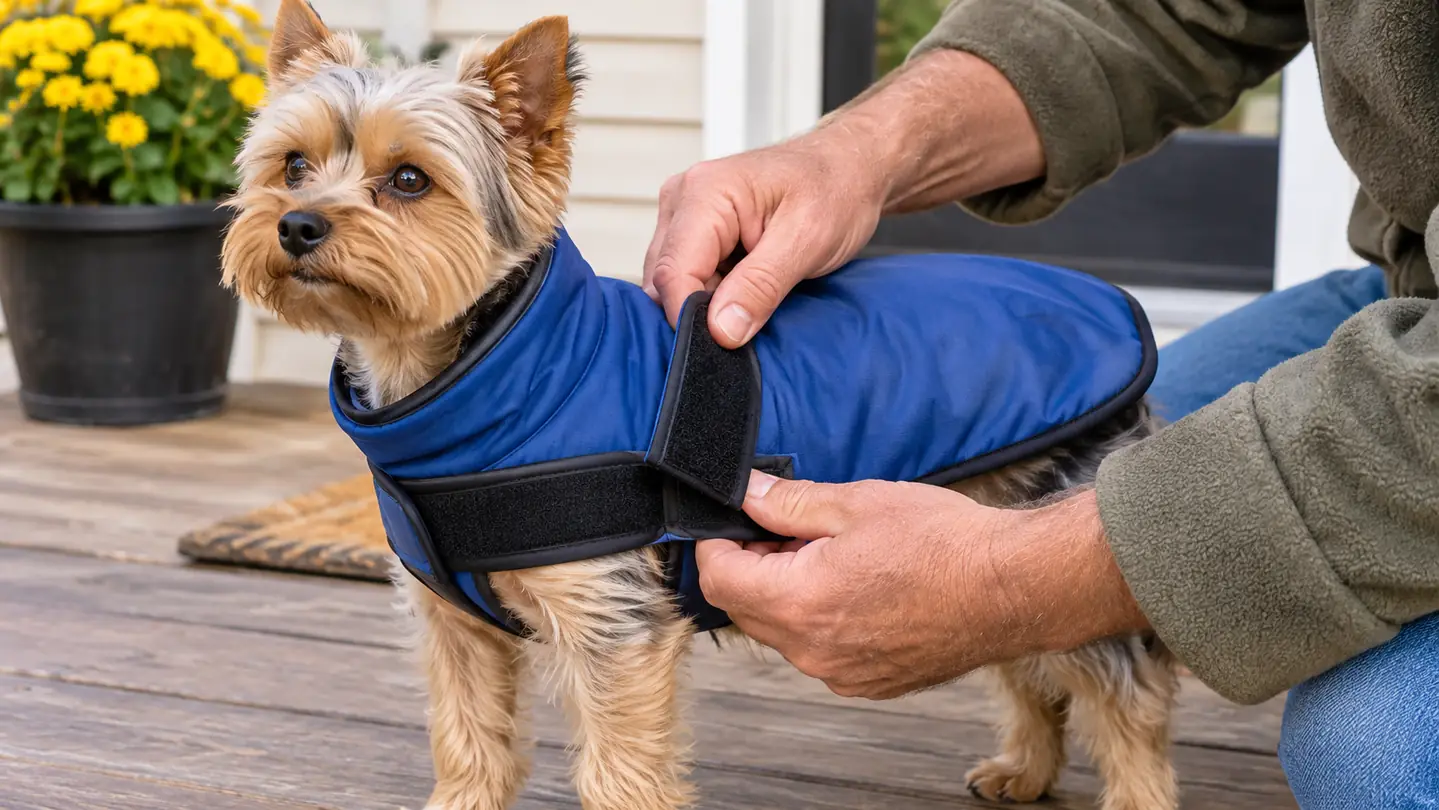
The Queenmore coat uses an easy hook and loop closure, which is a fancy way of saying Velcro-style straps. That is a good thing for a wiggly 10-pound dog. Lay the coat flat on the floor with the fleece lining facing up, set Pepper on top of it with her front legs just ahead of the chest straps, then bring the sides up and fasten the closure behind her shoulders.
Fasten it snug enough that you can slide two fingers flat between the coat and her chest. That is the fit check I use for every coat. Too loose and the wind gets in and the coat slides sideways on the walk. Too tight and she will stand frozen in the middle of the sidewalk, which is how a dog tells you something is uncomfortable.
The first time I put it on Pepper, she stood stiff for about thirty seconds, then remembered the walk was happening and trotted off. By the third wearing she would come to the door when she saw the coat in my hand. The hook and loop closure is also the reason she can get it on and off quickly when we come home, which matters when it is 28 degrees and the door is open. The coldest morning we tested it was 22 degrees in late December, with a thin sweater underneath, and the coat stayed put the whole 20 minute loop. That surprised me, because her deep chest and skinny waist are exactly the shape that makes coats spin. The closure sits behind her shoulders, and that placement is what keeps it from twisting on a short-backed dog. A coat that fastens at the chest only will always ride up on a dog built like Pepper. The behind-the-shoulders closure is the detail I did not know to look for until this coat.
Step 3: Layer underneath only when the frost is really bad
The Queenmore coat is a winter coat, not a base layer. It has a waterproof outer shell and a soft fleece lining, and for most mornings in the 30s that is enough on its own. But when the forecast says the teens or low 20s, I add one thin layer underneath: a knit sweater, not a thick one. The coat does the wind and wet work, and the sweater traps a little extra warmth against her chest.
Do not double up on thick layers. A puffy sweater under a fitted coat will bunch up under the front legs, and then you have a dog who is warm but walking funny. The test is the same two-finger check. If I cannot get two fingers under the coat with the sweater on, the sweater comes off and we just walk a little faster.
The worst morning was a January one, 18 degrees with a wind coming off the park. I put the thin sweater on first, then the Queenmore over it, and I checked the fit before we left the porch. Two fingers slid under the coat, snug but not tight. Pepper walked the full 20 minutes with her tail up, and when we got home the fleece lining was dry against her chest. The sweater underneath was damp at the edges, which told me the coat was doing the wind and wet work while the sweater handled the extra warmth. On mornings above freezing I skip the sweater entirely. The coat alone is enough down to the low 30s, and knowing that saves me five minutes of wrestling a wiggly dog into two layers. The coat is reversible too, which gives you a second colorway for the same warmth. I mostly keep the fleece side in for the coldest days because the lining sits against her chest, and flip it when the morning is only damp and chilly. Reversible is not a gimmick here, it means the coat is still doing its job on the days you would rather not wash it yet.
Step 4: Keep the coat waterproof and the paws out of the salt
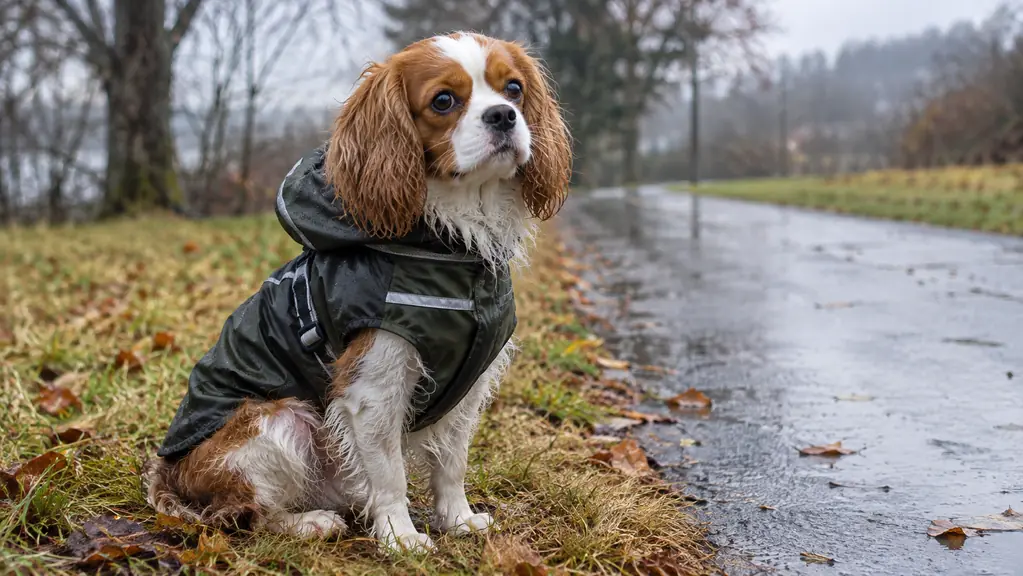
The Queenmore coat is waterproof, which is the feature that matters most in a Medford winter. Drizzle here is constant, and a knit sweater soaks through in ten minutes and then sits cold and wet against a dog's chest. The waterproof shell sheds the drizzle, and the fleece lining stays dry underneath. That is the difference between a dog who finishes the walk comfortably and a dog who shivers on the porch steps afterward.
Waterproof does not mean self-cleaning. When we come in from a wet walk, I wipe the outside of the coat down with a damp cloth and hang it on the back of a chair to dry before the next walk. I do not put it on the heater, that will break down the waterproof shell over time. And I check the hook and loop closure every few weeks, because wet fur and grit can make the straps grab less.
One thing the coat does not do is cover the paws. On icy, salted mornings Pepper still lifts her paws, so I put her in booties on those days. The coat and the booties are separate jobs: the coat keeps her core warm, the booties keep the salt off her feet. The day I knew the waterproof shell was doing its job was a drizzly Tuesday in February. It rained the whole 15 minute loop, not hard, just the steady Oregon kind that soaks everything slowly. Pepper came home dry from the shoulders back. Her head and legs were damp, because the coat does not cover those, but her chest and belly were dry, and that is where a small dog loses heat fastest. Before this coat, a wet walk meant a shivering dog and a towel on the porch. Now she stands still for the paw wipe and walks straight to her blanket. If your dog hates boots the way Pepper did at first, practice in the house for a few minutes a day before you head out.
Step 5: Wash it the way the tag says
The Queenmore coat is hand wash only. I know, nobody wants another hand-wash item. But the tag is right, and I learned that the hard way with a different coat that went in the machine and came out with the lining bunched and the shell puckered. This one gets a sink of cool water, a little mild detergent, a gentle squeeze rather than a wring, and a flat dry on a towel. I rinse twice, because leftover soap can irritate a dog's skin, and I squeeze the water out from the top down so the fleece lining does not bunch. It takes about a day to dry, so I wash it on a Sunday evening and it is ready for Monday's walk.
Two winters in, the Queenmore coat still looks like a coat, not a rag. The stitching has held, the hook and loop closure still fastens firmly, and the fleece lining has not pilled the way cheaper linings do. Hand washing takes five minutes of actual work. The coat is made of fleece and polyester, and it has held up far better than I expected for something that gets worn twice a day, every day, from November to March.
If you have a dog who wears a coat every single day for four months, the care routine is part of the purchase. I would rather own one coat that needs a sink wash than two coats that fall apart in the machine. The Queenmore has been the one coat for us.
What Else Helps
A coat gets the job done, but a few other things made our winter walks easier. A short walk is better than a long one on the coldest days, so we do two 15 to 20 minute loops instead of one long trek. I also keep a spare sweater at home for the days the coat is drying; Pepper wears it for porch potty trips, and it means the coat is never rushed back on before it is dry. And I check her chest and belly when we come in, because a coat that fits well should never leave red marks. I learned that lesson with a borrowed coat that left a raw patch under Pepper's front leg, and it took a week to heal. Now I check every time, even on days when she seems fine. If you see any red marks, the coat is too tight and you need to size up.
Two winters in, the Queenmore coat still fastens firmly, the fleece lining has not pilled, and Pepper trots to the door when she sees it in my hand.
Give your small dog a warmer winter this year
If your dog shivers below 45 degrees the way Pepper does, the Queenmore fleece winter coat is the piece that actually fixed our walks. Waterproof shell, soft fleece lining, hook and loop closure, and 15 sizes so you can find the fit.
Amazon Check Today's Price on Amazon →