
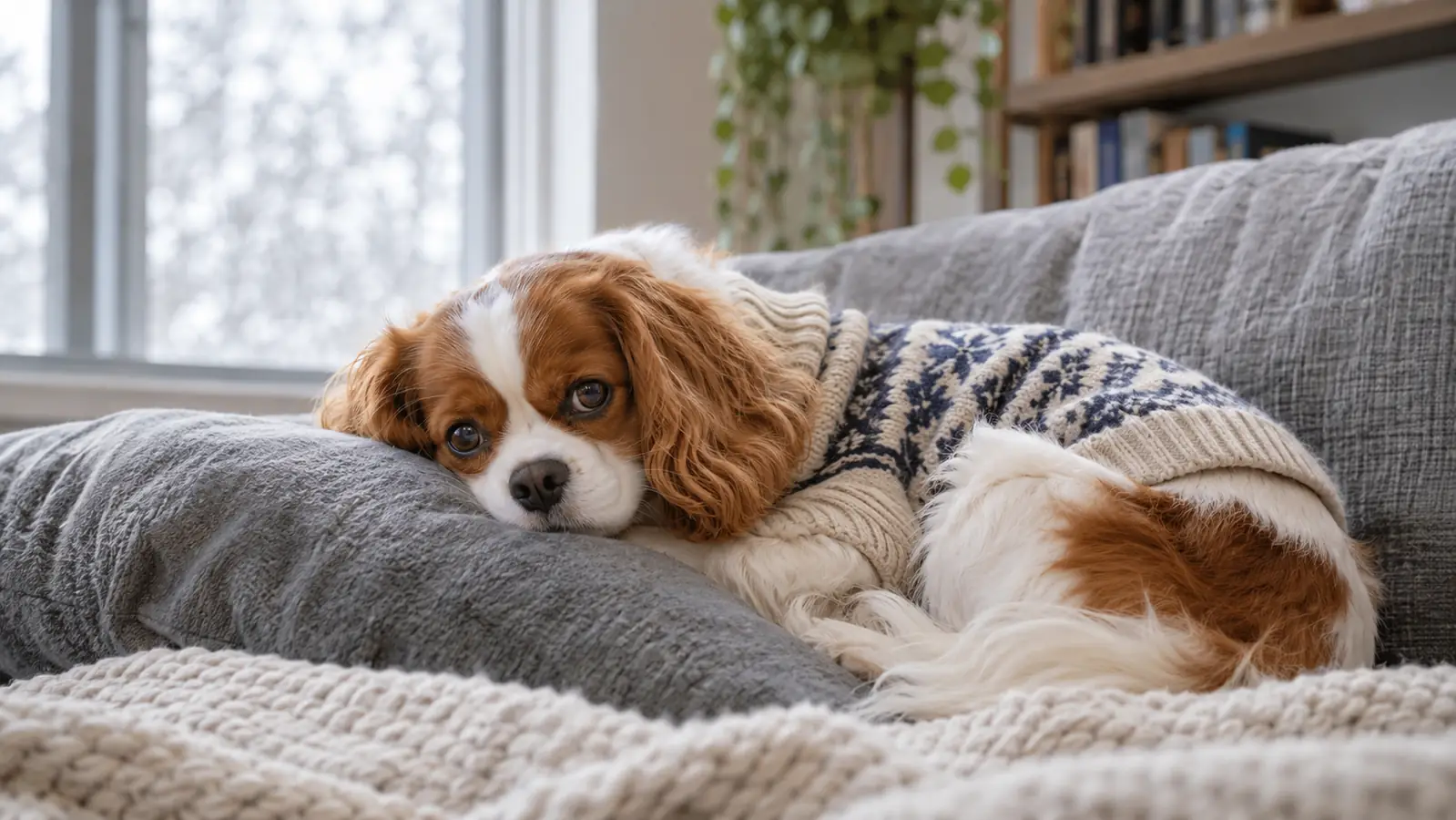
Pepper is a 7-year-old Miniature Pinscher, about 10 pounds, with a deep chest and legs like twigs. She starts shivering below about 45 degrees, which in Medford, Oregon means she shivers from November through March. I learned the hard way that a sweater for a toy dog is not a smaller version of a sweater for a Lab. The neck is too loose, the chest binds, or the whole thing slides sideways the moment she steps off the porch. Sizing is the entire game.
Before I figured that out, I bought a small that swallowed her, then an extra small that fit her chest and bagged at the neck, then a "one size fits all" that fit nothing. The problem was never the sweater. It was that I was guessing. When I bought the Lorehelina knit sweater 2-pack in XS about a year ago, I measured Pepper first, then compared her numbers to the size chart like it was a math problem. This walkthrough is that process, step by step, including the part where the stretchy acrylic saved me from my own math. If you have a toy dog, a tape measure, and ten minutes, you can get the fit right the first time.
Two sweaters, one honest size chart: the Lorehelina XS
The 2-pack comes in a stretchy acrylic cable knit with a turtle neck, sized for an 11.9-inch chest, a 9.1-inch back, and a 9.5-inch neck. Measure your dog first, then check today's price.
Amazon Check Today's Price on Amazon →The Five Steps That Finally Worked
I have dressed a lot of small dogs in a lot of winter clothes, and the difference between a sweater Pepper wears all day and a sweater she hides from is almost always the measuring. These five steps take about ten minutes the first time and two minutes after that. I still run through them every fall before I pull the sweaters out of the drawer, because dogs change shape as they age, even when the scale does not move.
Step 1: Measure the chest, neck, and back with a soft tape
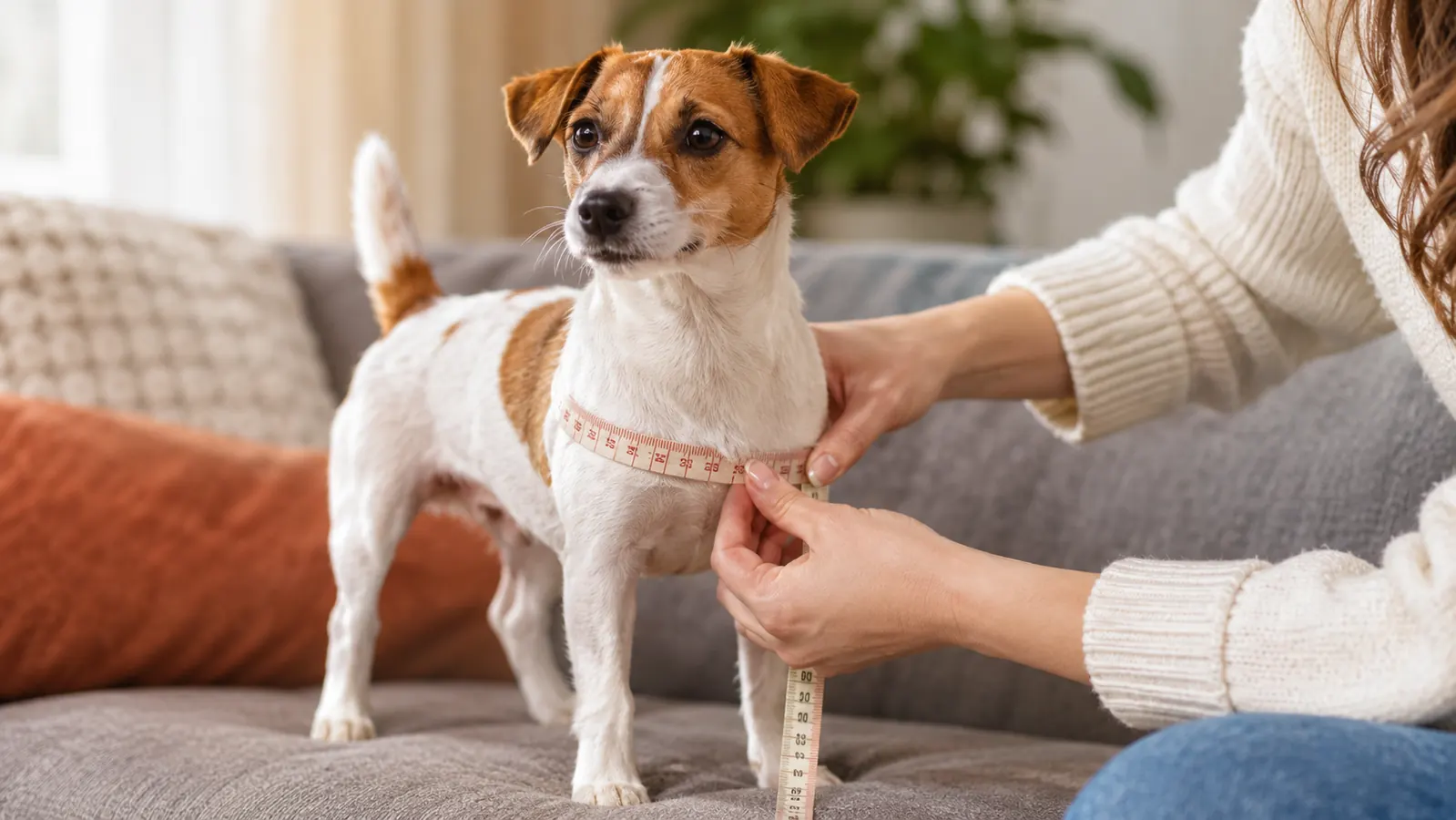
The three numbers that matter are the chest girth, the neck, and the back length. Chest girth is the widest part of the ribcage, right behind the front legs. Neck is where a collar sits, not up under the chin. Back length is from the base of the neck to the base of the tail. Use a soft cloth tape measure, the kind that comes in a sewing kit. A metal tape measure from the garage will not bend around a dog, and a string plus a ruler is a recipe for a half-inch error.
Pepper is used to the tape now, but the first time I measured her, I bribed her with a bit of cheese and did it while she stood at the kitchen counter. I measured twice, because the first reading on a wiggly dog is usually wrong. Her numbers are 15 inches of chest girth, 9 inches of neck, and about 14 inches from neck to tail base. Those three numbers are the whole puzzle. Every sweater size chart is built around them.
One caution: do not measure over a thick winter coat, and do not pull the tape tight. You want the tape to touch the fur without pressing in. A snug reading that is half an inch off will put you in the wrong size, and a wrong size in a knit sweater is not a small problem. It is a sweater that bunches under the front legs, a neck that gapes, or a hem that drags in the wet grass. Measure on a day when the dog is relaxed, not right before a walk when she is bouncing at the door.
Step 2: Compare your dog's numbers to the size chart
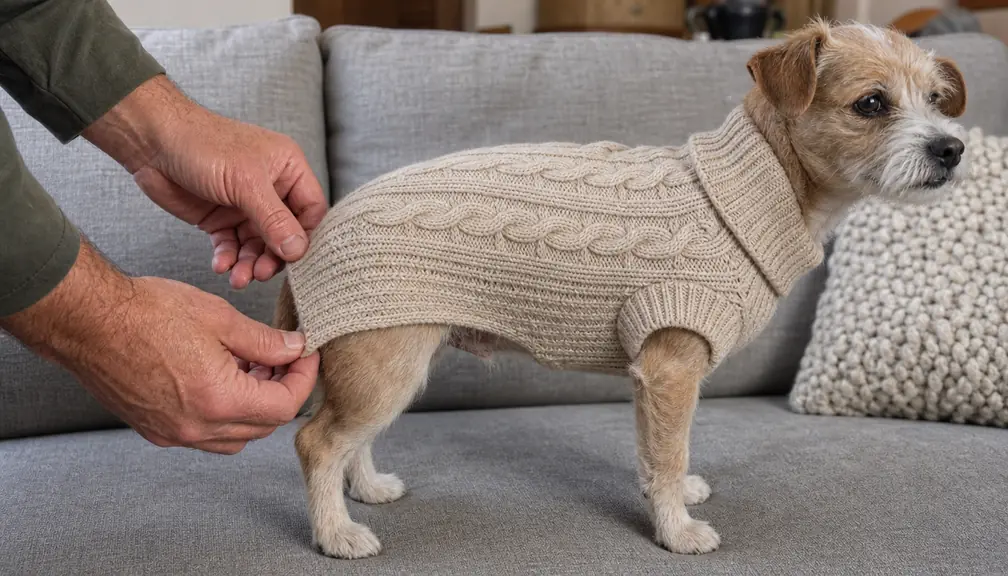
The Lorehelina XS is designed for an 11.9-inch chest, a 9.1-inch back, and a 9.5-inch neck. Lay your dog's numbers next to those and you will see the story immediately. Pepper's neck, at 9 inches, is right at home. Her back, at 14 inches, is longer than the 9.1 the chart names. And her chest, at 15 inches, is three inches bigger than the chart number. On paper, the XS should not fit her at all. I read the chart twice, because the first time I read it, I talked myself into a size that was wrong. The chart is not a suggestion. It is the answer key.
That is where the material saves the day. The chart number is the relaxed measurement, and the sweater is made of stretchable acrylic yarn. The listing says it plainly: the yarn offers a snug, comfy fit without restricting. In practice, that means the XS stretches over Pepper's chest and covers her back better than the numbers suggest. The stretch is doing real work, every single wear.
Here is the honest part. If your dog sits close to the chart numbers, the XS will fit like it was made for her. If your dog runs bigger, as Pepper does, the stretch covers a lot, but you are trading some of that neat, tailored look for the give. For indoor wear and quick porch trips, the trade is fine. For serious outdoor time in wind and rain, this knit is an indoor layer, not a walking coat. I reach for Pepper's fleece walking coat for that job. The sweater is not a coat, and knowing the difference saves you from expecting too much.
Step 3: Check the material and how it stretches
The Lorehelina knit is acrylic, and the knit is a cable knit. That combination tells you three things before you ever open the package. It stretches, which is what lets a deep-chested 10-pound dog wear an XS without feeling corseted. It holds its shape, so the turtle neck does not turn into a saggy tube after a few wears. And it is not water resistant, which the listing says outright. This is a dry-day sweater, not a raincoat.
Acrylic also dries fast, which matters more than you would think. The 2-pack comes with two sweaters, one pink and one purple, so Pepper wears one while the other dries after a wash. I wash them in the sink, though the care instructions say machine wash. I hang them over the back of a kitchen chair to dry, and they are ready by the next morning. I am careful because the knit is the whole point. A cable knit that gets pulled or pilled stops stretching evenly, and an uneven stretch is how you get a sweater that sags on one side.
The stretch matters for the fit, but it also matters for getting the sweater on and off. A stiff fabric has to go over the head in exactly the right way, and a wiggly dog does not cooperate with exactly. A stretchy knit gives you room to work. That is a small mercy on a dog who would rather be doing anything else.
Step 4: Try it on head-first and check the turtle neck
The Lorehelina is a turtle neck, so it goes on over the head, not over the legs. Gather the body of the sweater in your hands so the neck opening is a circle, slip it over the dog's head, then pull the body down over the chest and back. Do not try to pull it on like a t-shirt, because the turtle neck will catch on the ears and the dog will decide the whole project is a trap. The whole thing takes about ten seconds once the dog understands the game. Pepper has learned to stand still for this, but the first few times she treated it like a game of keep-away.
Once it is on, check the neck first. The turtle neck should sit at the base of the neck, not ride up under the chin and not hang loose enough to catch a front paw when she scratches. The XS is sized for a 9.5-inch neck, and Pepper's 9-inch neck sits right in the middle of that range. It is snug enough to stay put and loose enough that she can swallow and pant normally. If you can fit two flat fingers between the neck and the dog, the neck is right.
Then check the chest and back. The sweater should cover the back without pulling at the shoulders, and the hem should end before the belly gets wet on dewy grass. On Pepper, the stretchy acrylic lets the hem sit where it should even though her chest runs bigger than the chart. If the hem rides up, the armpits look strained, or the shoulders pull when she walks, the fit is wrong, no matter what the size chart promised.
Step 5: Watch the fit through a full day, bathroom trips included
A sweater can fit perfectly on the couch and still fail on the porch. The real test is a full day: morning potty trip, a nap, another potty trip, a short walk, dinner, and another nap. Watch for three things. The first is bunching, which happens when the sweater slides sideways and the turtle neck ends up under one ear. The second is chafing, which shows up as a dog scratching at her chest or armpits. The third is bathroom trouble, which is the one nobody mentions.
Pepper is a 10-pound dog with a deep chest and skinny legs. A sweater that is too long in the body will pick up moisture when she squats on wet grass, and a hem that is too loose will drag. The XS, on her, ends high enough that this is not a problem, but I learned to check the hem after every bathroom trip for the first week. If the hem is wet or dragging, the sweater is too big, full stop. No amount of stretch fixes a hem that is simply too long. A wet hem on a cold morning is how a dog decides she hates the sweater.
Give it a week before you decide. The first day, Pepper walked like she was wearing a costume, all stiff legs and sideways glances. By day three, she was napping in it. By the end of the week, she would stand at the door and wait for me to put it on when the house was cold. That is the real sign of a good fit: the dog stops noticing it. And when she stops noticing it, I stop worrying about it. That is the whole goal.
What Else Helps
A correctly sized sweater does not fix every winter problem. What helped Pepper most, beyond the Lorehelina knit, was layering. On frosty mornings she wears her fleece walking coat for the two daily walks, and the knit sweater goes on when we are back inside and the heat is low. The two pieces do different jobs. The fleece handles wind and drizzle. The knit handles the drafty living room and the quick trip to the porch. The porch potty trips are the in-between case, and those are exactly what the knit sweater is for: quick, cold, dry, and then back inside.
I will also say this: if your dog shivers at night, look at what she sleeps in before you buy anything. Pepper stopped shivering under her blanket when I switched her to fleece pajamas at bedtime. The knit sweater is for waking hours. The pajamas are for sleeping. Knowing which layer does which job is half of winter dog care. Pepper still shivers on the coldest mornings, but she shivers less, and she stops as soon as she is under the blanket.
And keep the washing simple. The care instructions say machine wash, and I have machine washed these on gentle without trouble. I air dry them flat. A knit sweater that is tossed in a hot dryer will shrink unevenly, and an unevenly shrunk sweater fits no one. Treat the sweater the way you would treat a good wool sock and it will last more than one season.
The chart says 11.9 inches of chest. Pepper is 15. The XS still fits, because the stretchable acrylic does the work. Measure first, and the stretch becomes your friend instead of your gamble.
The Lorehelina XS knit 2-pack, sized against Pepper's real numbers
Measure your dog, compare the numbers, and let the stretchy acrylic do the rest. Two sweaters in the pack, turtle neck, cable knit, machine washable. Check today's price.
Amazon Check Today's Price on Amazon →