
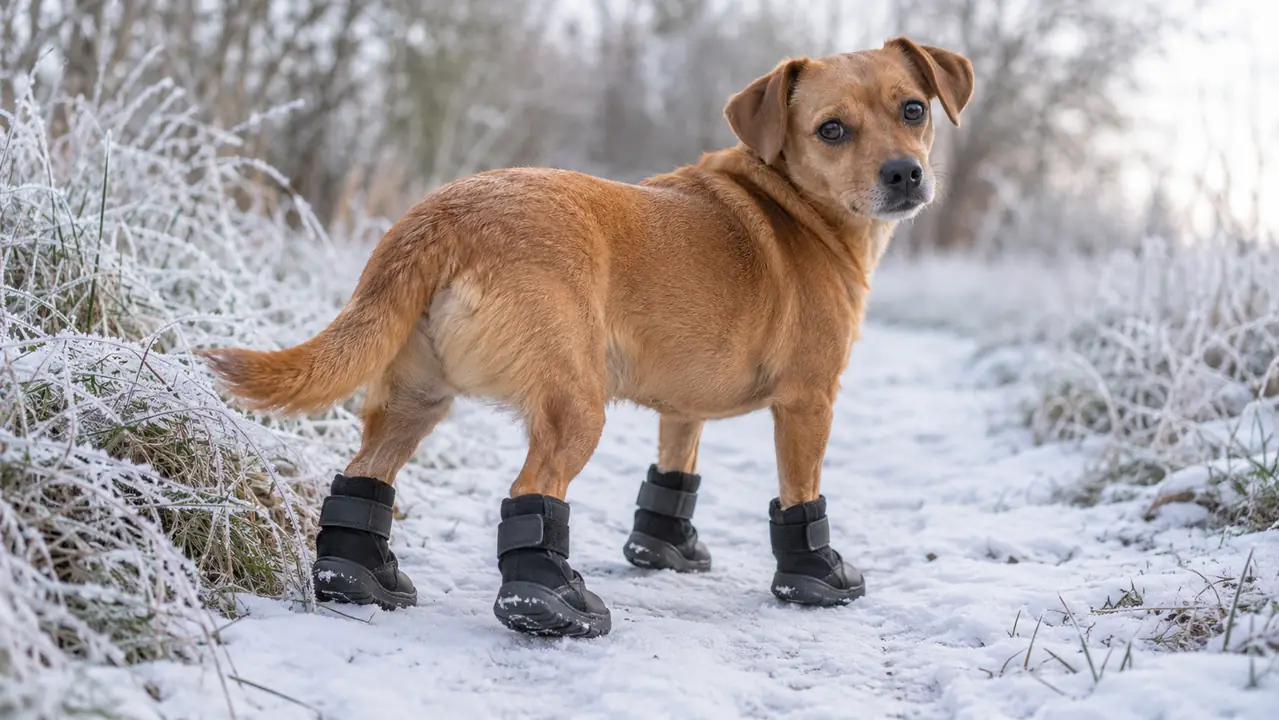
Last December, Pepper lifted her paw and hopped three steps, then put it down and lifted another one. The mobile-home loop had been salted after an ice storm, and her pads were raw by the time we got home. Our vet said to keep her off the salted pavement until her pads healed, which meant carrying her across the worst stretch or walking her on the grass strip, where she refused to put her feet down. I had already ordered the QUMY dog boots after watching her shiver through two winters of wet grass, but the box sat unopened for two days. I was pretty sure a 10-pound dog with skinny legs would never walk in four little boots. I was wrong, but it took a week of short practice sessions to find out.
If your small dog freezes at the sight of a boot, or walks like a robot the first time you put them on, that is normal. The trick is not force. It is a slow, boring, treat-heavy routine that lets the dog decide the boots are fine. The whole method takes about a week, and most of that week is boring on purpose. Here is the exact step-by-step method that worked for Pepper, using the QUMY boots we still use on icy, salted and very wet days.
Start with a boot that actually fits a small paw
The QUMY set of four uses hook and loop straps and a polyester lining, and the smallest size still runs roomy on a toy dog, so you can snug the straps down. Check today's price on Amazon and have them ready before the first icy walk.
Amazon Check Today's Price on Amazon →Step 1: Measure the paw, not the weight
The QUMY listing says it plainly: measure the width of your dog's paws carefully, because that is the key to choosing the right size. The box also includes an instruction manual that says the same thing, which I read while Pepper nosed around the boots. Weight alone will not do it. Pepper is 10 pounds with narrow, dainty feet, and the smallest size is still roomy on her, so I snug the straps tight. A friend's chunky 12-pound dog needed the same size but could not get the straps closed over her wide paws, which tells you how much paw shape matters.
Trace the paw on paper while the dog is standing, so the toes are spread the way they are when walking. Measure the widest part and the length. QUMY lists the size as 2.8 by 3.2 inches (width by length) for the smallest size, so compare your tracing to those numbers before you order. Pepper's tracing came in at about 1.9 inches wide and 2.5 inches long, which put her near the bottom of that size, and the boots still fit with room to spare. When in doubt, size up, because a boot that is too small will cause more drama than one that is slightly big with snug straps.
Do this on a normal day, not the morning of the first snow. I measured Pepper on a dry Tuesday evening in early December, before the boots even arrived, using a piece of printer paper and a pencil. Her front paws are a little wider than her back paws, which is normal for a deep-chested little dog, so I traced all four and wrote front and back on the paper. The whole set of four boots weighs 7.04 ounces, light enough that Pepper did not notice the box, but I still let it sit on the counter for two days. I wish I had started the indoor practice the night it arrived, because the ice storm did not wait for me to feel ready.
Step 2: Let them meet the boots indoors first
Day one, I put the four QUMY boots on the living room rug and let Pepper sniff them while I sat on the floor. No reaching for paws, no straps yet. Every time she touched a boot with her nose, she got a small piece of boiled chicken, which is the only treat she will work for. This took maybe five minutes and it set the tone for everything after. She sniffed each boot, looked at me, sniffed again, and then lay down next to them, which I counted as a win.
Then I picked up one boot and touched it to her shoulder, then her chest, then her leg, treating her each time she stayed relaxed. The goal is to make the boot a boring object that happens to predict treats. The first time the boot touched her leg, she pulled her foot away, so I went back to touching her shoulder for a few treats before trying the leg again. If your dog flinches, stop, go back a step, and try again later. Short sessions beat long battles.
I did this twice on day one, once mid-morning and once after dinner, about five minutes each. The second session went faster than the first, which is how you know it is working. By the end of it, Pepper was sniffing the boots on her own and nudging them with her nose, which told me she had filed them under interesting but not scary. That is the whole point of step two: the dog decides the boots are fine before a single strap is closed. If you rush past this part, the first real walk will undo all your work.
Step 3: One boot at a time, with the house to yourself
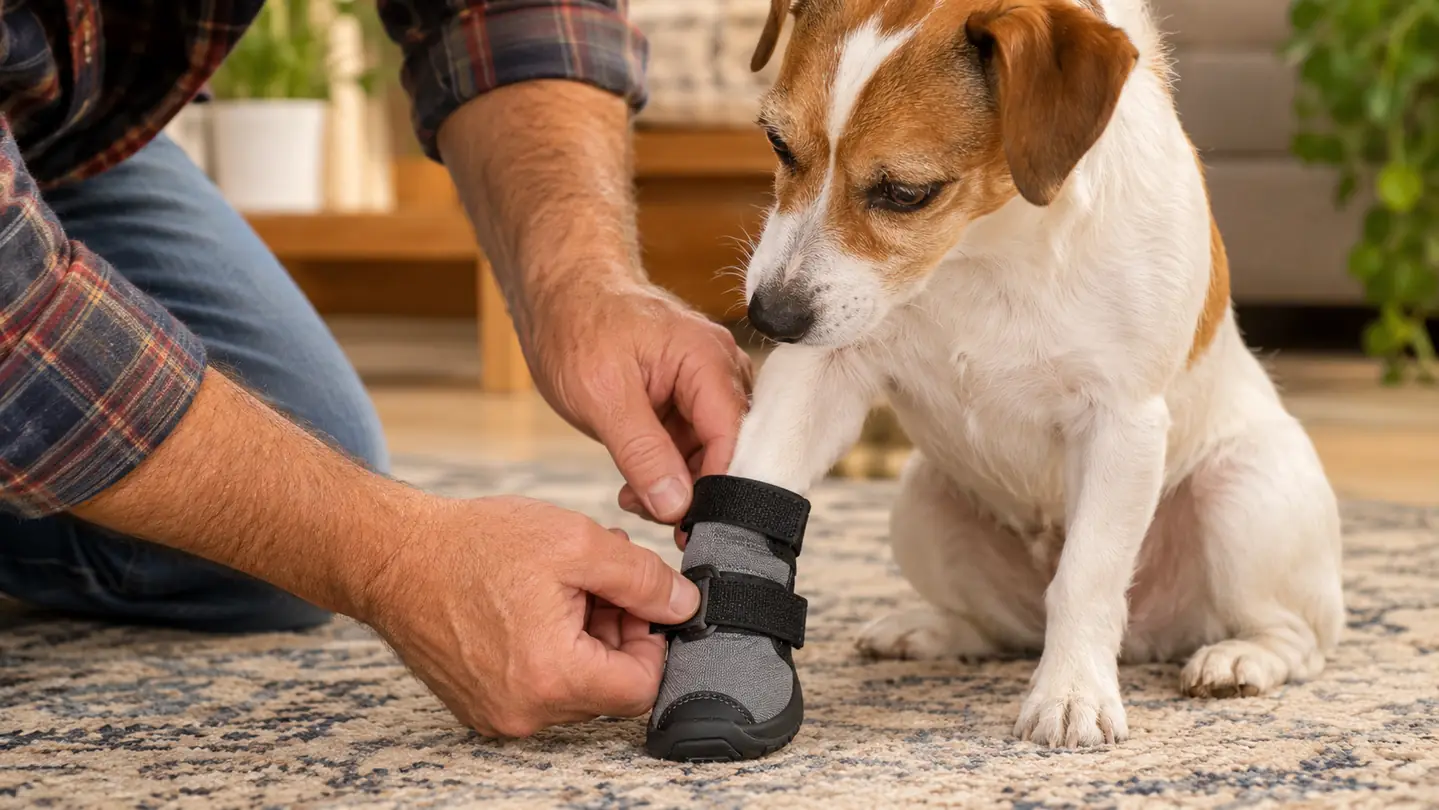
The first time I actually put a boot on, I chose a front paw and only that one. I opened the hook and loop strap wide, slipped the paw in, and closed it snug enough that it would not spin but loose enough to fit a finger between strap and leg. Pepper's legs are skinny, so the strap had a lot of extra length, and I tucked the tail of the strap flat against the boot so she could not catch it on anything. Then I set Pepper down on the rug and let her walk it off.
She did the classic high-step walk, lifting that one booted foot like it was a foreign object, and she shot me a look that said she was not sure who had betrayed her. I did not laugh where she could see me, and I did not take the boot off. I just followed her around the living room with treats, rewarding any step where the booted paw touched the floor. Ten minutes of that, and she was walking almost normally on three bare paws and one boot. The rubber and silicone sole gripped the rug, so she never slipped, which I think is why she settled down as fast as she did.
The next session, the same day after dinner, I added the second front paw, and she picked the high-step back up for about two minutes before she remembered walking works. The back paws came a day later, one at a time, same routine. I also put the boots on in the same order every session, front left, front right, back left, back right, because Pepper calms down when the routine never changes. Doing it one paw at a time means the dog can feel that walking still works, which is the whole ballgame with a small dog who has decided boots are suspicious.
Step 4: Practice indoors until walking looks normal
By day three, Pepper had all four QUMY boots on and was walking laps around the kitchen linoleum. She still stopped to stare at her feet, but the high-stepping was mostly gone. I kept the sessions to five or ten minutes, twice a day, always ending on a good note with a treat. Day four was the turning point: she trotted from the kitchen to the living room and back without stopping once, then sat down and waited for her chicken, which is about as good as it gets with a Miniature Pinscher.
The hook and loop closure made this part easy, because I could adjust each boot between sessions without any fiddling. The polyester lining and the faux leather and nylon outer held up to all the indoor walking, and the rubber and silicone sole gave her traction on the linoleum instead of sliding, which is what convinced her the boots were not going to dump her on her side. I checked the straps before every session and snugged them a little tighter as she got used to the feel.
A note on the soles: the QUMY boots have a tough slip-proof sole that gives stability and traction on rough terrain. That is the feature that matters most on ice, but it also matters indoors, because a dog who slips in boots will never trust them. The rugged sole and the upper are sewn together with high quality fabrics, and after a week of indoor laps and a full winter of walks, none of the four boots has come apart.
Step 5: Take the first walk somewhere short and dry
The first outdoor test was not the salted loop. It was the dry stretch of sidewalk in front of my place, about 30 feet of it, on a morning in the high 30s. I put the boots on inside, checked each strap, and carried Pepper to the sidewalk so she would not have to cross the wet grass to get there. She walked the whole thing with all four boots on and only stopped once to lift a paw and inspect it. I kept the walk to ten minutes and went home, and I took the boots off the second we were inside.
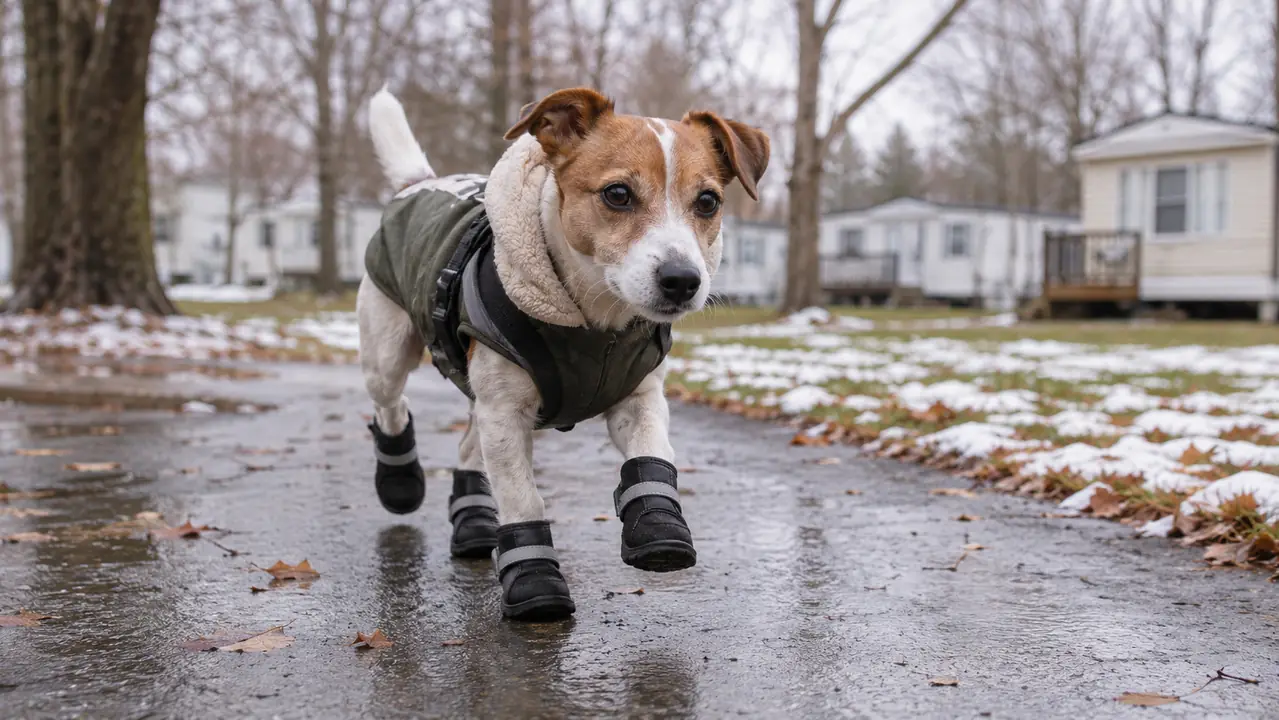
The next day we did the full loop, which is about 15 to 20 minutes around the park and the mobile-home row. The ice and salt were still there from the storm, and I braced for the hop. But Pepper walked the whole way without lifting a paw once. That was the moment I knew the week of practice had worked. She still hates wet grass and will do her business on the pavement if she can, but she no longer limps on salted pavement, and her pads have stayed soft and raw-free all winter.
After every wet or salty walk, I hand wash the boots in the sink with a drop of dish soap and let them air dry, because QUMY says hand wash only. A set of four means there is always a dry pair ready, and they have lasted through the rest of that winter and into this one. The hook and loop straps still close clean, and the soles still grip the ice.
What Else Helps
The boots do the heavy lifting on ice and salt, but a few other things made the whole routine easier. Pepper wears her Queenmore fleece coat on frosty mornings, and the QUMY boots go on over her regular paws, not over any kind of sock, because socks inside boots made her feet feel bulky and she refused to walk. I also keep a towel by the door for the 20 seconds it takes to wipe her legs and the boot soles before we come inside, and I check the straps once more before we head out. And on days when the loop is dry but the grass is wet, I skip the boots entirely and let her do her business on the pavement. The boots are for ice, salt and very wet days, not for every single walk. When we get home, Pepper heads straight for her Bedsure self-warming blanket in her crate-side bed, which has nothing to do with boots but everything to do with a warm, happy small dog in winter.
By day five, Pepper was walking the full salted loop without lifting a paw. The week of short, boring practice sessions did what two winters of hoping never did.
Give it a week before you give up
Most small dogs do not take to boots on day one. Pepper took about a week of short practice sessions before she walked normally in the QUMY set, and she has worn them through two icy winters since. Check today's price on Amazon and start the routine before the first freeze.
Amazon Check Today's Price on Amazon →