
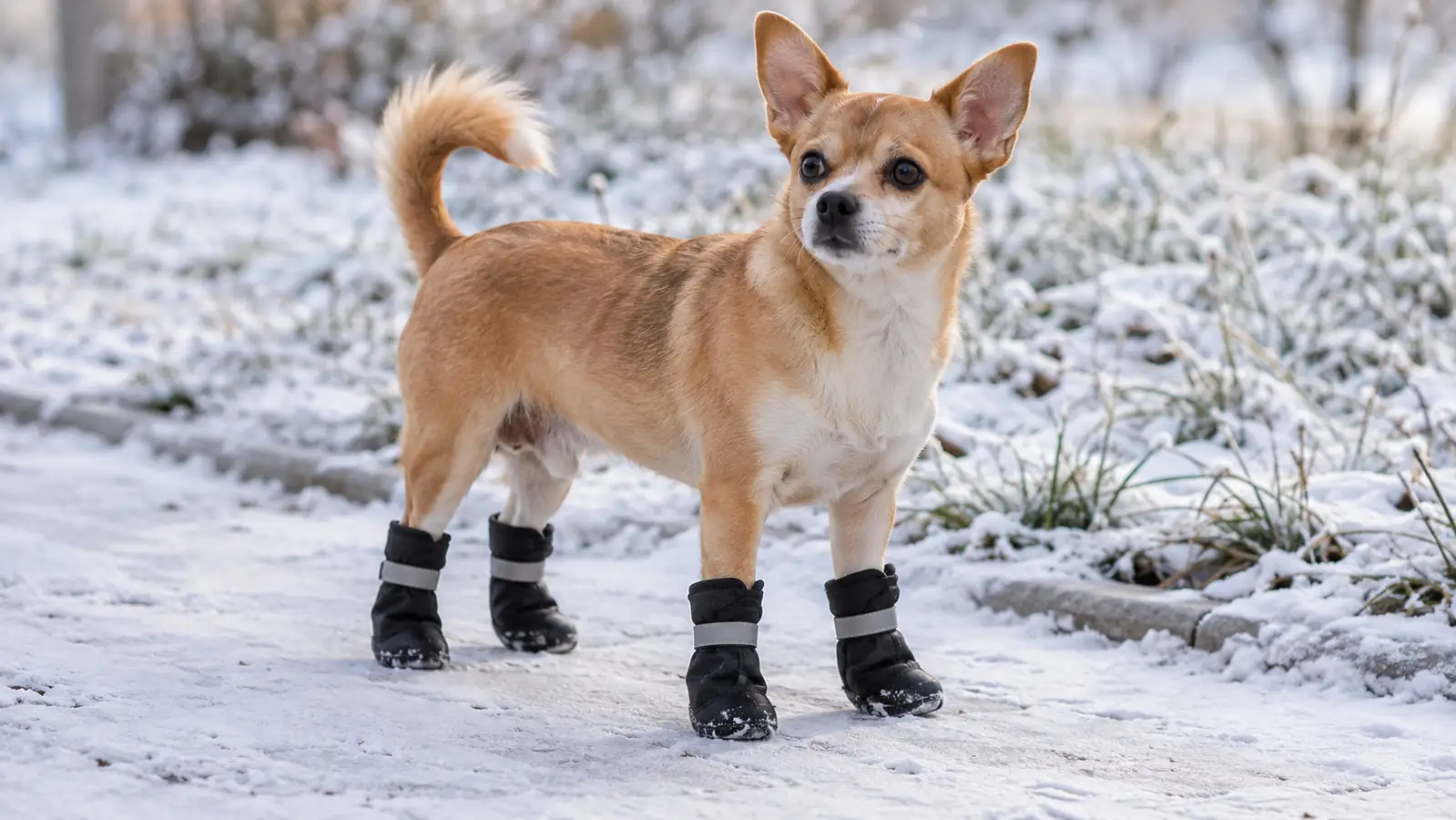
The first time Pepper limped on the mobile-home loop, I thought she had stepped on something sharp. It was December, the loop was salted, and she was lifting her front paw after every few steps, then setting it down like the ground was hot. She is a 7-year-old Miniature Pinscher, about 10 pounds, with the skinny legs that breed is known for, and I had never seen her that unhappy on a walk. I carried her the rest of the way home. That night I ordered the QUMY dog boots, a set of four, and told myself we would either learn to use them or I would send them back.
This is the long-term report, because a winter of salt, snow and cold wet mornings tells you more about a boot than any first impression. We used them on icy, salted and very wet days from last December through the end of March. Pepper still walks bare on dry days, and the boots live in the basket by the door for the mornings that need them.
The Quick Verdict
For a small dog whose paws cannot handle salt and ice, QUMY boots do the job once you get the fit right. The learning curve is real, the smallest size still runs roomy, and the straps need a firm snug. But they held up through a whole winter, stayed on during walks, and Pepper stopped limping.
Amazon Check Today's Price →Stop lifting paws and start walking the loop
If salt and ice are keeping your small dog inside, these are the boots that got Pepper through the season. Check today's price on Amazon and see if your paw size matches.
Amazon Check Today's Price on Amazon →How I've Used It
I bought the QUMY boots last December, after the salted loop made Pepper limp. The set comes with four shoes and one instruction manual. The manual is short, and the most useful thing in it is the part that tells you to measure the width of the paw carefully. That is not a suggestion. It is the whole game with a toy dog.
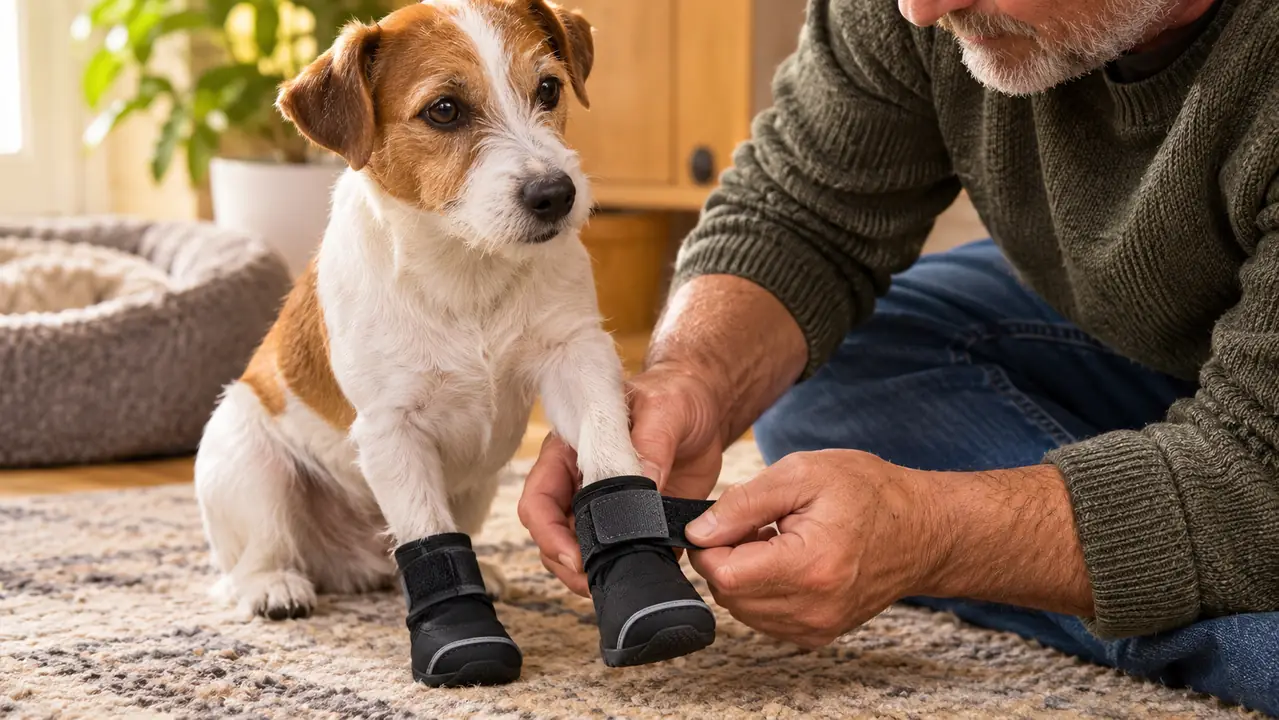
Pepper's front paws measure about 1.5 inches across at the widest point, and the smallest QUMY size is still roomy on her, so I snug the hook-and-loop straps as tight as they will go. The closure is simple: wrap, pull, press. There is no dial, no buckle, no zipper. Just the strap, which is exactly what I wanted on a cold morning when she is dancing on the doormat and I am trying to get us out the door.
We started inside. For about a week, I put the boots on her for a few minutes at a time in the living room, let her walk on the rug, gave her a treat, and took them off. The first two sessions she walked like a toy horse, high steps and a confused look. By day four she was trotting. By the time the next salted morning came, she was ready. The boots are hand wash only, and I have washed them twice in the sink with warm water and a little dish soap. They dried overnight and looked as good as new.
The first real test came on a morning in mid-January. The overnight low had been 24 degrees, and the park path was a mess of frozen puddles and salt. I almost left the boots at home because we were running late. I am glad I did not. Pepper walked the whole loop without lifting a paw once. She still stopped to sniff the same fence posts and still tried to chase the squirrel by the park gate, boots and all. That was the moment I stopped worrying about whether they would stay on.
I also learned my routine. Boots go on in the same order every time: front left, front right, back left, back right. Pepper stands still for the front two and tries to sit for the back two, so I do the back ones while she is standing at the treat jar. The whole process takes about two minutes now, down from five when we started.
Why Salt and Ice Are So Hard on Small Paws
When a dog lifts a paw on a salted walk, it is not being dramatic. Salt crystals sit between the toes, ice balls form in the fur, and the cold pavement pulls heat out of a paw that has very little padding to begin with. A 10-pound dog has small paws with thin pads, so the discomfort happens faster than it would for a big dog. Pepper would walk a few steps, lift a front paw, shake it, set it down, and repeat. By the end of the loop she was limping.
The QUMY boots solve that in a straightforward way. The sole is slip-proof and rugged, which gave Pepper traction on the icy patches by the park gate. The upper is a mix of faux leather, nylon and polyester, with a rubber and silicone sole. I do not pretend the boots keep her paws toasty on a 20-degree morning, because they are not insulated boots. They are protection. They keep the salt off, keep the ice from balling up, and keep the cold ground from hitting her pads directly. For Pepper, that was enough.
One morning in February I saw the problem up close. Pepper came in from a bare-paw walk, and between her toes there was a small ball of ice with a grain of salt frozen into it. That was the whole story in miniature. The salt melts the snow, the melt refreezes between the toes, and every step grinds it against the skin. No amount of paw wax was going to fix that, because the ice was between the toes, not on the pad. The boots cover the whole paw, so there is nowhere for the ice to form.
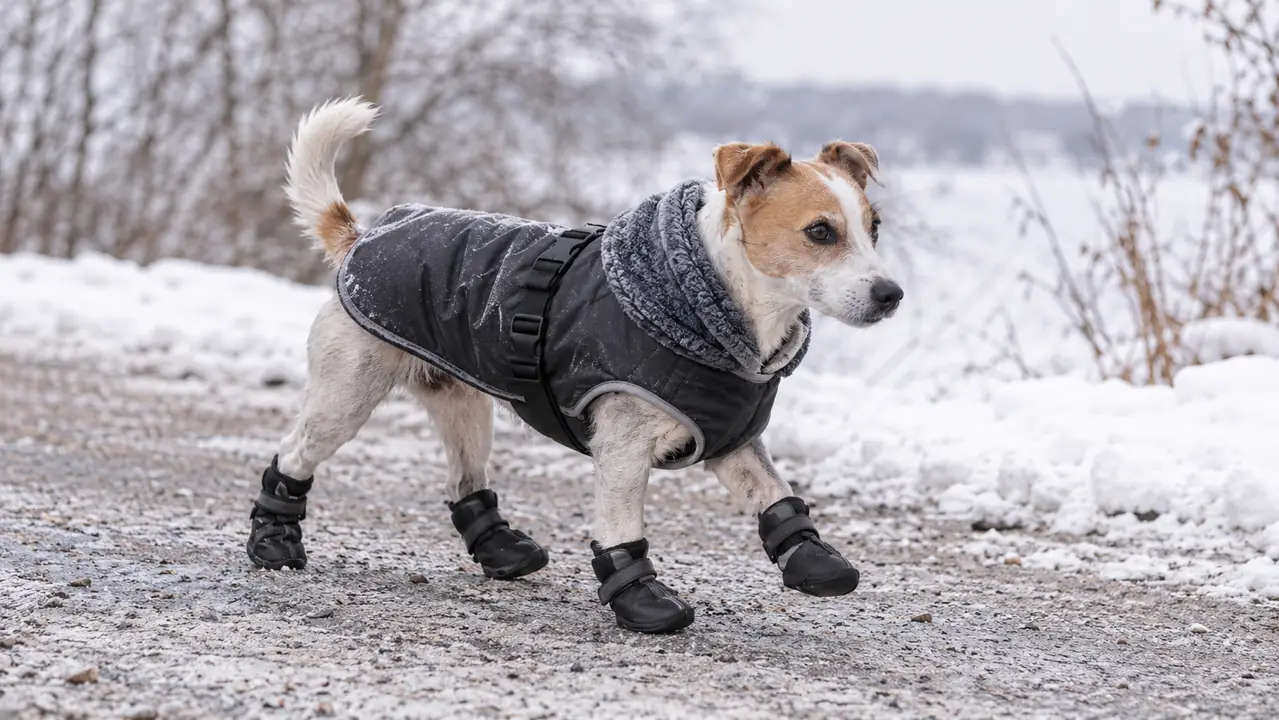
Pepper starts shivering below about 45 degrees. She is a short-coated dog with a deep chest and skinny legs, and she feels the cold in her whole body, not just her paws. The boots are not the whole winter outfit. She wears her fleece coat over the boots on the coldest mornings, and the combination is what gets us through the 15 to 20 minute walk. The boots handle the ground, the coat handles the air, and neither one has to do the other's job.
Fit, Sizing and the Toy Dog Problem
Here is what nobody tells you about boots for a toy dog: the smallest size is still big. QUMY lists the size as 2.8 by 3.2 inches, width by length, and the sizing chart tells you to measure the width of the paw. I did that. Pepper's paws are narrow, so the boots fit her lengthwise but are roomy across. That is not a defect. It is the nature of a boot made to fit a range of paw widths. The hook-and-loop straps exist for exactly this reason, and when I pull them snug, the boots stay put.
The boots stayed on during our walks. That was my biggest worry, because a boot that falls off in the snow is worse than no boot at all. We did lose one once, on a morning when I did not pull the strap tight enough. I found it by the park bench, put it back on, snugged it properly, and we did not lose another one all winter. The lesson is simple: take the extra five seconds to pull the strap firm before you step out the door.
The set of four is also handy when one boot gets wet or muddy. I can swap it out and keep walking. The item weight is 7.04 ounces for the set, which is nothing. Pepper does not seem to notice the weight once she is moving.
Measuring Pepper's paw took me two tries. The first time I tried to hold a ruler under her paw while she stood, and she pulled away before I got a reading. The second time I traced her paw on a piece of paper while she sat on the kitchen counter, then measured the tracing. That worked. Her front paws are about 2 inches long, which put her at the bottom of the QUMY size chart. The boots are listed as 2.8 by 3.2 inches, width by length, so there is extra room in both directions.
The roominess is why the straps matter so much. The hook-and-loop closure lets me pull the boot snug around her ankle, and because the boot is slightly long, her toes sit a little forward inside it. That has not caused any rubbing or blisters over the winter, and Pepper has never tried to chew a boot off. She does sometimes stop and shake a front paw, the way she does after stepping in a puddle, but she has never stopped to try to remove one.
How They Held Up Through the Season
I was honestly waiting for the boots to fall apart. Cheap winter gear does that, and I have returned enough of it to know the pattern. The QUMY boots surprised me. The stitching held, the straps still fasten firmly, and the soles show normal wear but no peeling. We used them on salted pavement, wet grass, slush and one proper snowfall. I washed them twice by hand, and they came out clean both times.
The only wear I can point to is on the inside of one boot, where the faux leather has softened from rubbing against Pepper's paw. It has not worn through, and it does not bother her. For a set of four boots that costs less than a single trip to the vet for a paw issue, the durability is more than fair.
The slush week in late February was the real test. We had three days of rain on top of snow, and the loop turned into a gray slurry that soaked everything. Pepper wore the boots every day that week, and they came home caked with wet grit each time. I rinsed them under the tap, set them on the radiator, and they were dry by the next morning. The hook-and-loop straps still grabbed firmly, and the soles did not separate from the uppers anywhere.
The one snowfall we got was nothing like the pictures of mountain dogs romping through powder. It was about two inches of wet snow that melted by noon. Pepper walked through it in the boots without complaint, and the snow did not ball up between her toes the way it used to. That alone was worth the price of the set, because snowballs between the toes used to stop a walk cold.
What I'd Change
If I could change one thing, it would be the sizing range for toy dogs. The smallest size works for Pepper, but only because her paws are long enough to fill the boot lengthwise. For a dog with shorter, rounder paws, these would be too long. Measure the width, measure the length, and if your dog is between sizes, expect the straps to do a lot of work.
I would also like a brighter color option for visibility on gray winter days. I did not buy them for looks, and I am not going to pretend color matters for function. But on a foggy morning, a little more visibility would not hurt. That is a small wish, not a complaint.
The other thing I would note is that the sizing chart leads with weight, and weight is a poor guide for a toy dog. Pepper is 10 pounds, which is within the listed weight range for the smallest size, but a 10-pound dog with narrow paws and a 10-pound dog with round, thick paws need different widths. Measure the paw, ignore the weight, and if you are between sizes, size down if the paw is narrow and size up if it is wide. That is the practical version of what the manual is trying to say.
What I Liked
- Stayed on through a whole winter once the straps are snugged properly
- Slip-proof rugged sole gave Pepper real traction on ice and salted pavement
- Set of four means a spare when one boot gets wet or muddy
- Hand wash only, but they dry overnight and look as good as new
- Simple hook-and-loop closure, no dials or buckles to fight on a cold morning
Where It Falls Short
- Smallest size still runs roomy on toy dog paws, so fit takes time and care
- Not insulated, so they protect paws but do not warm them in deep cold
- Plan on about a week of indoor practice before a small dog walks normally
- Sizing chart leads with weight, which is a poor guide for a narrow toy dog paw
The QUMY boots stayed on through salted pavement, slush and one proper snowfall, and after a whole winter they still fasten like the day they arrived.
Who This Is For
These boots are for the owners of small and toy dogs who walk in places where salt, ice and wet slush are part of the season. If your dog lifts its paws, limps, or refuses to walk on cold pavement, QUMY boots are a reasonable fix. They are also for people who want a set of four so there is always a spare, and for dogs who need traction on icy patches. Pepper is a 10-pound Miniature Pinscher with thin pads, and they worked for her.
Who Should Skip It
Skip these if your dog has very short, round paws that do not fill the smallest size, because the fit will frustrate you. Skip them if you are not willing to spend a week of short practice sessions indoors, because the first few walks will look silly and you need patience. And if you are looking for insulated winter boots for deep snow and extreme cold, these are not that. They are paw protectors, not expedition gear. For the salted loop around a mobile-home park in Medford, Oregon, they were exactly right.
Give your small dog a winter without lifted paws
A set of four QUMY boots got Pepper through the season. If your dog's paws are struggling with salt and ice, check today's price on Amazon and measure before you buy.
Amazon Check Today's Price on Amazon →