
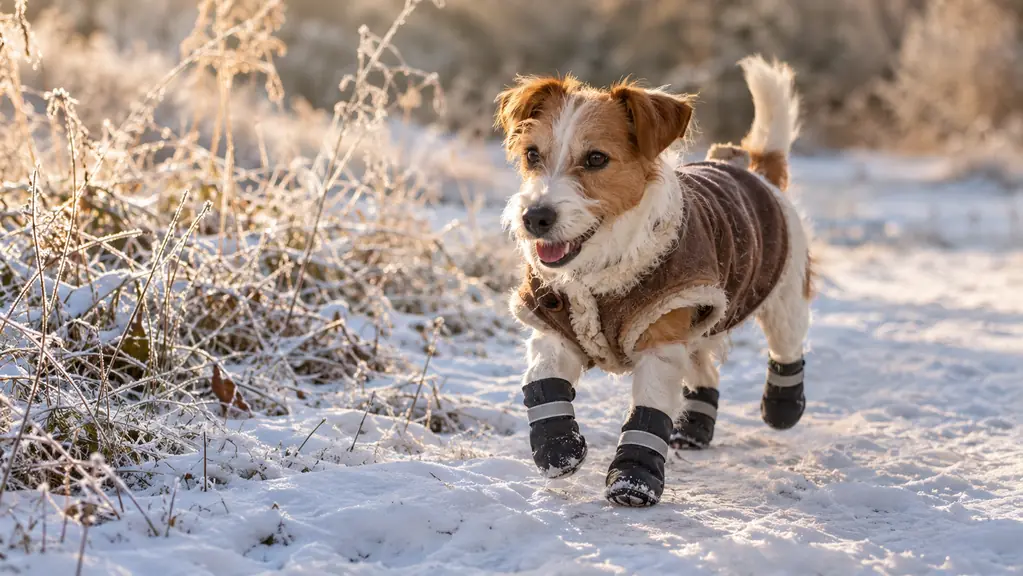
Ask me what actually got Pepper through last winter and I will point to a pair of QUMY dog boots before I mention anything else. The short answer to the boots-versus-wax question is this: paw wax is for mild days, and QUMY boots are for the days that make a small dog lift her paws and limp. They solve different problems, and once you see the difference on a salted sidewalk, the choice stops being a debate.
Pepper is a 7-year-old Miniature Pinscher, about 10 pounds, with a short single coat and skinny legs. She starts shivering below about 45 degrees and she hates wet grass. Last December, after the county salted the mobile-home loop, she started lifting her front paws and stopping mid-walk. That is when I ordered the QUMY snow boots, a set of four. It took about a week of short practice sessions in the house before she would walk normally in them. Paw wax never would have fixed that walk, because the problem was not just the salt. It was the ice and the cold of the pavement itself, and a balm cannot put a barrier between a paw and the ground.
| QUMY boots | Paw wax | |
|---|---|---|
| Price | Higher upfront cost for a set of four | Lower cost to start, and a little goes a long way |
| Warmth | Full layer of fabric and rubber over the whole paw | Thin balm on the pads only, no insulation |
| Traction | Slip-proof sole gives stability on ice | Nothing to grip the ice |
| Coverage | Covers the whole paw, toes and all | Covers the pads only, wears off as you walk |
| Ease of use | Takes practice, with hook and loop straps to snug | Rub it on and go |
| Sizing | Measure the paw, and the smallest size runs roomy on toy dogs | No sizing at all |
| Best for | Icy, salted and very wet days | Mild cold, dry days and quick porch trips |
Where QUMY Boots Win
QUMY boots win on every day that makes you reach for winter gear in the first place. The set of four covers the whole paw, toes and all, with a tough slip-proof sole that gives a small dog real traction on ice. Pepper went from tip-toeing across frozen puddles to trotting over them. The materials, a mix of faux leather, nylon, polyester, rubber and silicone, block the cold pavement and keep the salt off her pads. Nothing you rub on a paw can do that, because the protection has to be a physical layer, not a coating.
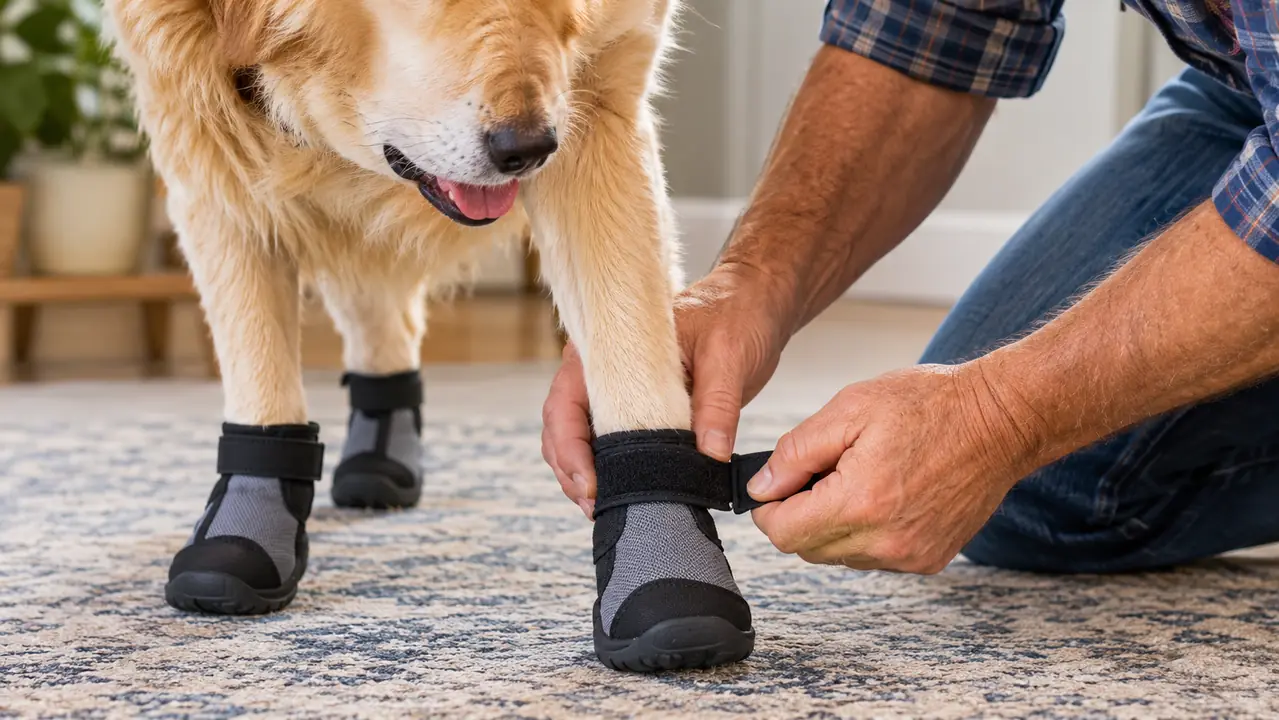
The other win is warmth. Paw wax is a thin balm. It does not insulate. The boots put a layer between Pepper's paw and the frozen ground, and on a morning in the 20s that layer is the difference between a dog who walks and a dog who stops to lift each foot. I also like that the straps are hook and loop, so I can snug them down around her skinny legs. The set comes with an instruction manual that walks you through sizing, and the care is simple: hand wash only, then let them dry. After a salted walk I rinse them in the sink and they are ready for the next morning.
I also noticed the boots changed how I planned walks, not just how Pepper walked. On a salted morning I used to cut the loop short or carry her across the worst stretches. With the boots on, we do the full 15 to 20 minutes and she walks the whole loop without a pause. The boots do not make her love winter, but they made winter walkable, and for a dog who needs the exercise to stay warm, that matters.
Where Paw Wax Wins
I am not here to talk you out of paw wax, because it has its place. It wins on ease, full stop. You rub it on the pads, give it a minute, and you are out the door. No sizing, no straps, no practice sessions. For a dog who only needs protection on a quick porch trip or a dry, cold day, wax is the faster answer. It also costs less to start, since you buy one tin and use a little at a time, and there is nothing to measure.
Wax also wins for the dog who will not tolerate anything on her feet. Pepper took about a week to walk normally in boots. Some dogs never get there, and I have heard from enough owners to know it is not a training failure. If your small dog freezes or flops over the moment you put boots on, wax at least gets you out the door. Just know what it is not doing. It is not adding warmth, it is not giving traction on ice, and it wears off, so on a longer walk you are reapplying or coming home early.
Wax is also the better travel answer. I keep a tin in the car for the odd trip to the vet or a short errand, where I do not know the sidewalk situation. It takes up no room, needs no sizing, and works fine for a short exposure. If your winter is mostly made of short trips like that, wax may be all you ever need.
The winter fix for a small dog who lifts her paws
QUMY boots give small dogs a full barrier against ice, salt and cold pavement. Measure the paw, snug the hook and loop straps, and practice inside for a few days.
Amazon Check Today's Price on Amazon →Who Should Buy Which
Buy the QUMY boots if your walks happen on salted sidewalks, icy paths or very wet days, and if your dog will tolerate a little practice time. That was my situation last December, and the boots are still the thing I reach for when the forecast says ice. Buy paw wax if your winters are mostly dry and cold, if your dog only steps out for five minutes at a time, or if she simply will not wear boots no matter how many treats you try. And plenty of people do both: wax for the mild days, boots for the bad ones. That is a perfectly reasonable answer too, and honestly it is the answer I landed on.
One more thing worth saying: do not buy either one because a checklist says you should. Watch your dog on a walk. If she walks normally on cold dry days, wax is plenty for the occasional frosty morning. If she starts lifting her paws, stopping, or licking her feet after walks, that is your cue for a boot. Pepper gave me the answer by limping on the loop, and I listened. Your dog will tell you the same way.
What a Week of Testing Looked Like
To compare them fairly, I used each one on the same loop around the park and the mobile-home loop, about 15 to 20 minutes each way. On a dry 38-degree morning, paw wax was the easier start. I rubbed it on Pepper's pads, we walked, and she did not lift her paws once. The wax did its job on a mild day. On a morning after freezing rain, with the sidewalks salted and the puddles crusted over, the wax was not enough. Pepper started lifting her front paws within a block. I carried her home, washed her pads, and put the QUMY boots on. She finished the walk without a single pause.
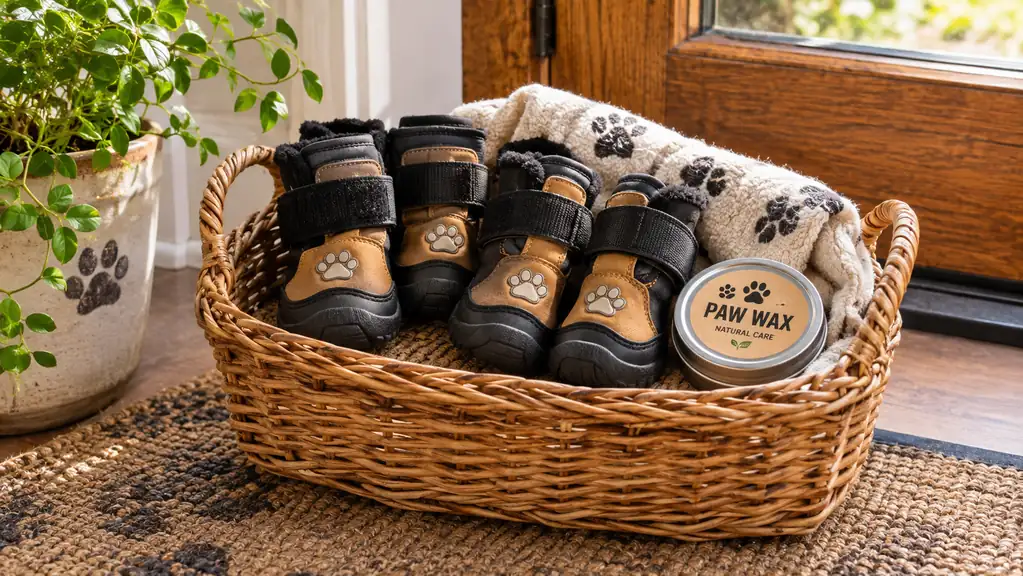
That is the honest difference in one story. Wax handles the mild stuff. Boots handle the days that actually hurt. I kept both in the basket by the door last winter, and I reached for the boots far more often than I expected. The mornings that looked fine from the kitchen window were the ones with black ice on the loop, and the boots were the only thing that made Pepper walk normally on them.
Why Salt Is the Real Enemy for a Toy Dog
People ask me why I did not just wash Pepper's paws after walks and skip the gear. Washing helps, and I do it anyway, but it is a reaction, not a fix. Salt sits on the sidewalk long after the snow is gone, and it gets into the spaces between a dog's toes where a wipe misses it. Pepper would lick her paws all evening after a salted walk, and licking makes the irritation worse. The boots stopped that cycle before it started, because the salt never touched her skin.
The other thing salt does is dry out the pads, and a small dog's pads are already thin. Pepper is 10 pounds, so all her weight lands on four small feet, and every step on a rough, salted surface is more pressure per square inch than a big dog feels. That is why she limped. It was not one dramatic injury. It was a hundred small irritations adding up over a walk. A barrier fixes that. A balm softens the pad afterward, but it does not stop the irritation from happening in the first place.
How to Get a Toy Dog Used to Boots
If you decide on boots, do not expect day one to look like the product photos. Pepper's first session lasted about three minutes and she walked like a deer on ice skates. I let her wear them inside for a few minutes at a time, gave her a treat for standing still, and added a few steps each session. By day three she was walking around the living room. By day seven she was trotting on the loop. The trick is to make the house the practice space first, so the boots are boring by the time they meet the sidewalk.
Sizing matters more than anything else. The QUMY listing itself says to measure the width of the paw carefully, and that is the part people skip. Length tells you which size to start with, but width tells you whether the boot will stay on. Pepper's smallest size is still roomy on her skinny legs, so I snug the hook and loop straps as tight as they will go and check them halfway through the walk. A boot that is too loose will twist or slip off, and a dog who loses a boot on a cold walk learns to distrust the whole idea.
The Fine Print on QUMY Boots
No review of mine is complete without the cons. The boots are roomy on a toy dog, even in the smallest size, so the straps have to do real work. They are hand wash only, which is fine, but it means you are the care routine after every salted walk. And there is no warranty to speak of, so you are trusting the materials to hold up. Mine have held up through the rest of last winter and they were still in the basket this fall, ready for the next season.
The other con is the practice period. Some dogs take to boots in a day. Pepper took a week, and I have heard from owners whose dogs never took to them at all. If you are buying boots for a dog who is deeply sensitive about her feet, budget the time before the first real cold snap, not after. Start inside, keep the sessions short, and end on a treat. That is the whole method, and it works for most dogs, but it is not instant.
The Bottom Line
If you want one answer: buy the QUMY boots for winter walks on salt and ice, and keep a tin of paw wax for the mild days in between. They are not the same product wearing different labels. One is a barrier and the other is a balm. For a 10-pound dog with a short coat, the barrier is what gets her through a frozen morning without limping. That is the test that matters, and the boots pass it.
Whatever you choose, measure first and practice before the first hard freeze. The gear only works if it fits and if your dog will walk in it. For us, the QUMY boots earned their spot in the basket by the door, and the wax earned the shelf above it. They are not competitors. They are two tools for two different days.
Get the boots that got Pepper through a salted winter
QUMY boots cover the whole paw, add traction on ice, and block salt and cold. Measure the paw first, then snug the straps.
Amazon Check Today's Price on Amazon →