
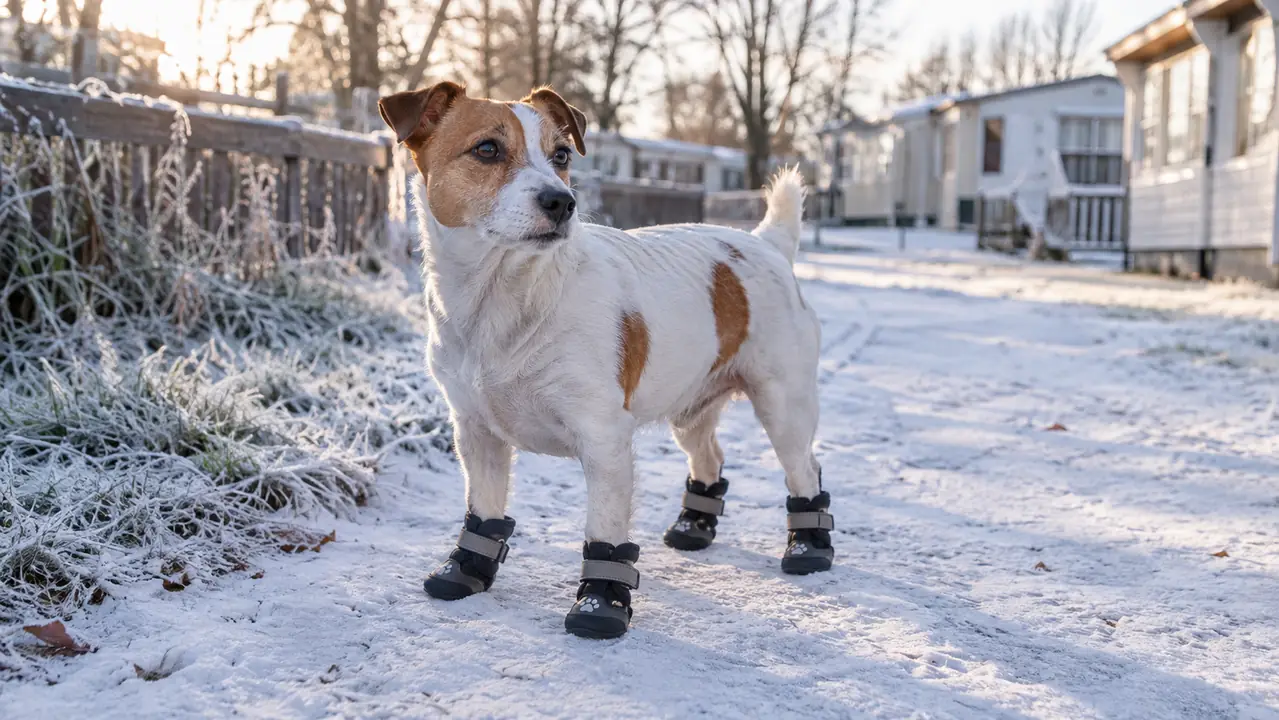
The first snow of last December came down overnight and left about three inches on the mobile-home loop. Pepper, my 7-year-old Miniature Pinscher, took one step onto the salted walk, lifted her front paw, and hopped the rest of the way to the grass. By the second day she was limping on the ice, and I was carrying a 10-pound dog who hates wet grass and shivers below about 45 degrees. That is when I ordered the QUMY dog boots, a set of four, and started measuring her paw.
The listing said to measure the width of the paw carefully, and that turned out to be the whole job. I ordered Size 7, which is 2.8 by 3.2 inches, and even that was roomy on Pepper. The hook and loop straps are what saved us. I snugged each one tight around her ankle, and the boots stayed put, which surprised me because nothing else stays on her skinny legs. The width is the part you cannot guess, and the listing is right about that.
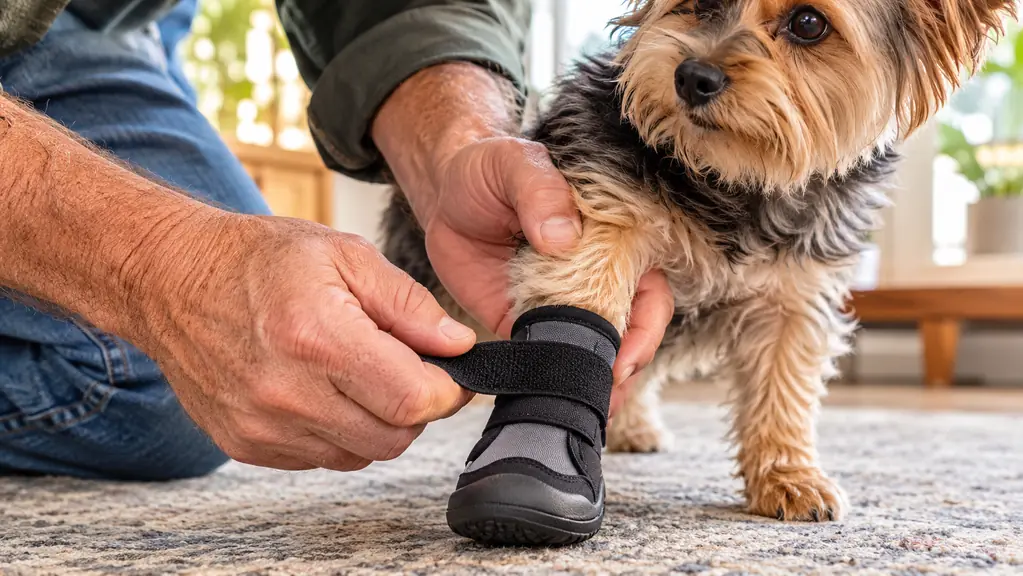
The first time I put them on, Pepper stood like a statue and refused to move. I had read that this is normal, so I did not push it. The first two sessions lasted about five minutes each, and that was enough. We did short practice sessions in the house, a few minutes at a time, on the rug and then the linoleum. By the end of the week she was trotting around the kitchen like the boots had always been part of her.
The real test was the next icy morning. The boots have a tough slip-proof sole, and on the salted walk she did not lift a paw once. The soles gripped the ice in a way her bare pads never did, and the boots did not slide around on her ankles. She walked the whole loop, stopped to sniff the park fence, and came home with dry, warm feet. For a dog who had limped the day before, that felt like a small victory.
Later that day I checked her paws the way the instruction manual suggested. No cracked pads, no redness, just a dog who had walked on ice without complaining. I rinsed the boots in the sink, because they are hand wash only, and set them by the heater. That has been the routine ever since.
I will be honest about the limits. The boots are not a cure for winter. Pepper still shivers on the really cold mornings, and she still hates wet grass. I spent years dispatching school buses through Oregon winters, so I know working gear when I see it. What the boots fixed was the specific problem of salt and ice on the walk. That is the honest version, and I think it is the useful one.
On the salted walk she did not lift a paw once. She walked the whole loop and came home with dry, warm feet.
The boots that ended the limp on the mobile-home loop
Set of four, hook and loop straps, and a slip-proof sole. Measure the paw first, like the listing says, then check today's price.
Amazon Check Today's Price on Amazon →The practice week mattered more than the boots themselves, I think. Dogs do not understand footwear. Pepper had to learn that the boots were not a trap, and that the reward at the end was a walk without salt between her toes. I kept the sessions short, gave her a treat when she walked a few steps, and stopped the moment she wanted to stop.
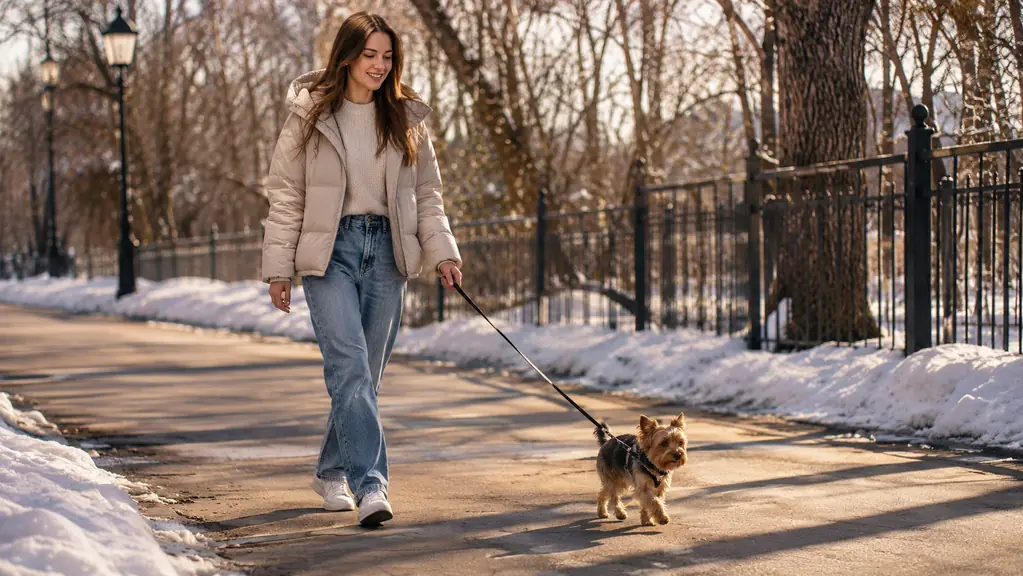
Once she got it, the difference showed up over a few walks, not overnight. The limp disappeared. She stopped lifting her paws at every driveway. On the coldest mornings, when the frost was white on the grass and she would normally shiver before we reached the park, she walked the full 15 minutes without asking to be picked up. That is a real change for a dog who used to hop on three legs at the first crunch of salt.
The set of four means there is always a spare if one gets wet or muddy, and the instruction manual that came in the box was simple enough that I did not need it. The QUMY boots are made of faux leather, nylon, and polyester, with a rubber and silicone sole that is sewn to the upper. They have taken a lot of salt and gravel this winter and they still close snug around her ankles.
I will also tell you who should skip them. If your dog has never lifted a paw on snow, you may not need boots at all. If you are not willing to spend a week of practice sessions, the boots will sit in the drawer. And if your dog's paws are between sizes, measure twice, because the width is the part that matters. The listing says it, and the listing is right.
I mentioned the boots to our vet at Pepper's checkup, and she said the main thing was to keep the paws clean and dry after walks. The boots make that easier because the salt does not get between her toes in the first place. That is the whole argument for them, as far as I am concerned.
What I'd Tell You If We Were Sitting at My Kitchen Table
If we were sitting at my kitchen table with coffee, I would tell you this: buy the boots before the first snow, not after. Measure the paw the day they arrive and put them on the dog indoors for a few minutes at a time. Do not expect a perfect walk on day one, because there is no such thing with a dog who hates new things. What you get instead is a dog who walks the whole loop on a salted morning without limping, and that is worth the week of practice. For Pepper, the QUMY boots turned the worst part of winter into just another walk. I would not say that about every piece of dog gear I have bought, but I will say it about these. If you are standing in the aisle wondering whether boots are worth it, ask yourself one question: does your dog lift a paw on cold pavement? If yes, you already know the answer.
If your dog lifts a paw on cold mornings, this is the fix
Measure the paw, order the set of four, and give it a week. The QUMY boots are on Amazon at today's price.
Amazon Check Today's Price on Amazon →